
 Article
October 14, 2026
6 min read
 FirstConnectt
Enterprise communication insights
FirstConnectt
Enterprise communication insights
Article · FirstConnectt Insights
Customer conversations happen every second. A shopper asks about delivery. A patient requests an appointment update. A banking customer verifies a transaction. A frustrated subscriber wants help before canceling.
Each interaction leaves behind something far more valuable than a chat transcript. It leaves data.
Yet many businesses measure customer communication using only surface-level metrics like message volume or response count. Those numbers may look impressive on a dashboard, but they rarely explain whether communication is actually improving customer satisfaction, increasing revenue, or building loyalty.
The organizations that consistently deliver exceptional customer experiences don’t simply communicate more. They measure the right things, identify patterns, and continuously improve every interaction.
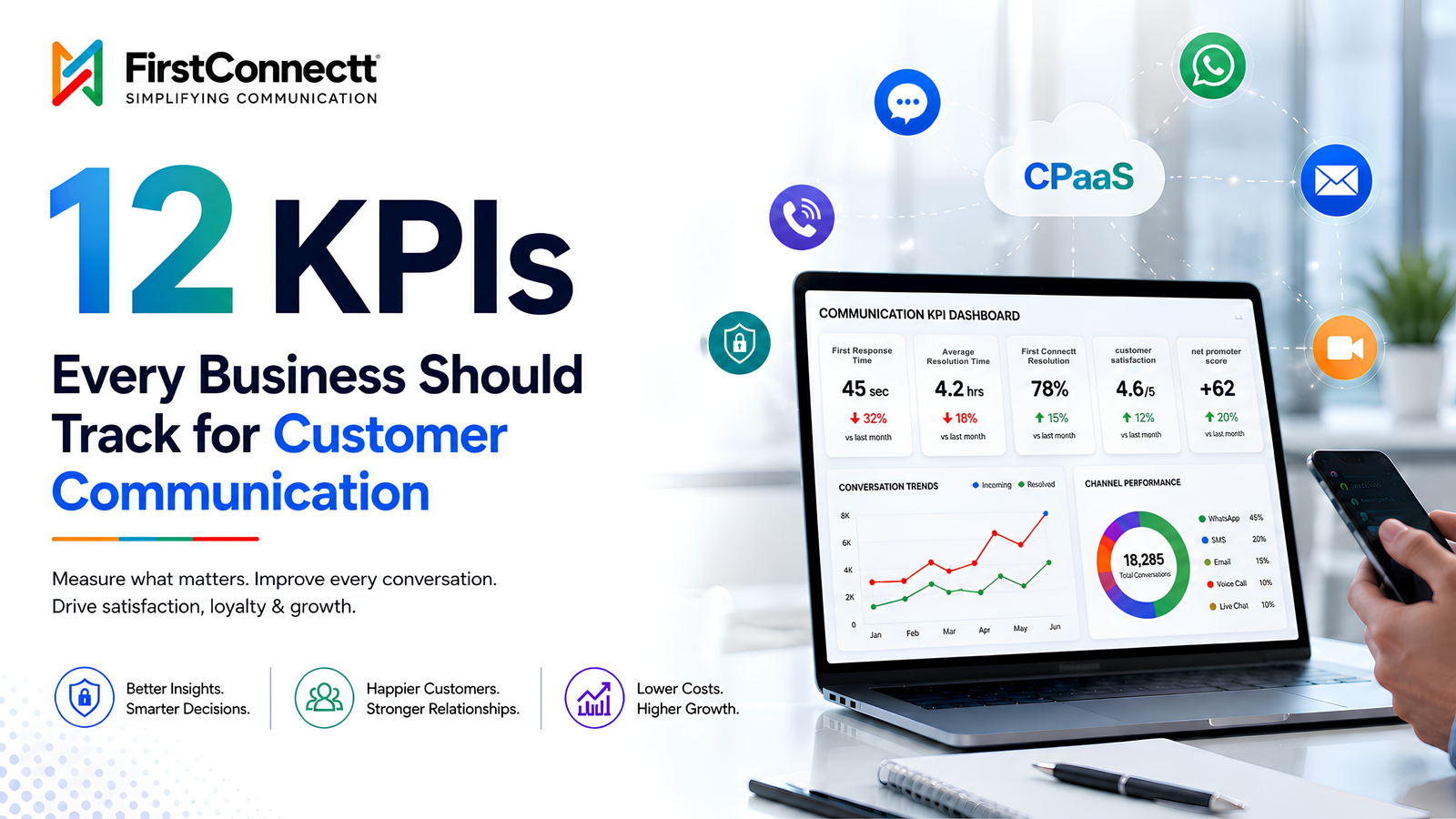
If your business relies on channels like WhatsApp, SMS, email, voice calls, live chat, or messaging platforms, these are the customer communication KPIs that deserve a place on your dashboard.
Customer communication is no longer just a support function. It influences sales, retention, operational efficiency, and brand perception.
Without measurable KPIs, businesses often struggle to answer questions like:
As businesses scale their communication, connected infrastructure becomes essential. FirstConnectt helps bring multiple channels together for smoother and more reliable customer communication.
However, tracking meaningful customer communication metrics transforms assumptions into informed decisions. Here are the 12 Customer Communication KPIs That Actually Matter.
FRT measures how long customers wait before receiving the first reply after initiating contact.
Formula: First Response Time = Total Time Until First Response ÷ Number of Conversations
Why Does It Matters?
Customers expect immediate acknowledgment, especially on messaging platforms. Research consistently shows that quicker responses increase customer trust and reduce abandonment rates.
Example
A customer messages your business on WhatsApp asking whether a product is in stock.
Best Practices
Responding quickly means little if solving the problem takes days. ART measures how long it takes to completely resolve customer issues.
Why This KPI Matters
Fast resolutions lead to:
Common Mistake
Closing tickets before issues are genuinely resolved creates misleading reports while frustrating customers.
FCR gauges the percentage of customer issues solved during the very first interaction.
Formula: FCR = (Issues Resolved on First Contact ÷ Total Issues) × 100
Why It’s Important
Every additional interaction costs time and money. Higher FCR means:
After completing an interaction, many businesses ask: “How satisfied were you with your experience?”
This simple question generates one of the most valuable customer communication KPIs.
Typical Rating Scale
Expert Tip
Collect CSAT immediately after conversations while the experience is still fresh.
Customer satisfaction measures one interaction. Net Promoter Score measures long-term loyalty.
The classic question asks: “How likely are you to recommend our company to others?”
Scores help identify:
Tracking NPS alongside communication improvements helps reveal whether better conversations translate into stronger customer relationships.
People don’t want complicated support journeys. Customer Effort Score measures how easy it was for customers to solve their problem.
Why It Matters
The easier the interaction, the higher the likelihood customers return.
Reducing effort often improves loyalty more than exceeding expectations.
Sometimes customers leave before receiving assistance.
This KPI measures how often conversations end prematurely.
Common Causes
High abandonment rates usually indicate operational bottlenecks.
Businesses communicate across multiple platforms:
Not every channel performs equally. Measuring response rates by channel helps determine:
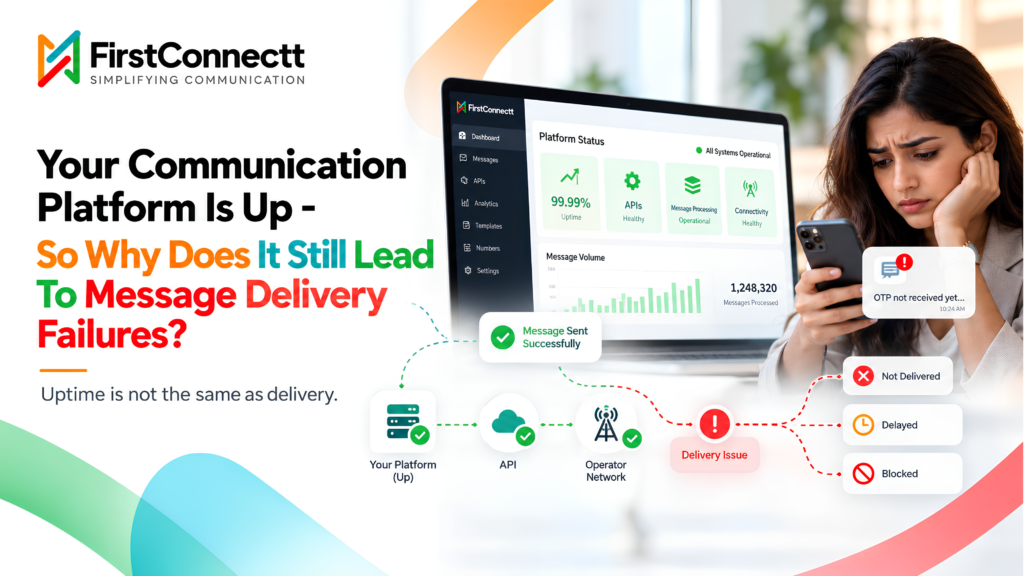
If your messages never reach customers, every other KPI becomes meaningless. Delivery Success Rate measures the percentage of successfully delivered communications.
Formula: Delivery Success Rate = Delivered Messages ÷ Sent Messages × 100
Monitor Issues Like
For channels supporting delivery visibility, measuring opens or reads provides valuable insights.
Examples include:
Low open rates often indicate:
Communication influences whether customers stay or leave. Retention measures how many customers continue doing business with you over time. Excellent communication creates:
When retention drops, communication quality should always be investigated alongside pricing, product quality, and competition.
Customer communication isn’t only about support. Sales conversations generate measurable business outcomes. Examples include:
Tracking conversation-driven conversions helps connect communication efforts directly to revenue.
From OTPs to customer updates, every interaction needs the right channel. FirstConnectt helps businesses manage these communication journeys through connected and scalable infrastructure.
Looking at one metric in isolation rarely tells the full story. Imagine this scenario:
| KPI | Result |
| First Response Time | Excellent |
| Resolution Time | Poor |
| CSAT | Declining |
| FCR | Low |
At first glance, response performance appears strong.
However, customers are receiving quick replies without getting meaningful solutions.
That’s why successful organizations monitor multiple customer communication KPIs together rather than optimizing a single metric.
Retail brands monitor:
Improving communication often increases repeat sales while reducing support requests.
Financial institutions focus on:
Reliable communication directly affects security and customer confidence.
Healthcare providers commonly measure:
Clear communication reduces missed appointments and improves patient experiences.
Even companies that track customer communication KPIs can miss valuable insights. Avoid these pitfalls:
The goal isn’t collecting more data. It’s using the right data to improve customer experiences.
To make your metrics actionable:
Although tracking KPIs is essential, businesses often encounter obstacles such as:
Investing in integrated communication platforms and centralized analytics can simplify measurement and reveal trends that isolated reports often miss.
Multiple integrations, channels, and workflows can create unnecessary complexity. With FirstConnectt, businesses can simplify their communication setup and keep customer interactions connected.
If you’re starting today, prioritize these five KPIs:
These metrics provide a balanced view of speed, quality, customer experience, and business impact. As your communication strategy matures, expand your dashboard to include retention, delivery performance, effort scores, and channel-specific insights.
Every customer conversation tells a story. Some stories end with a purchase. Others prevent a cancellation. Some strengthen trust after a problem is resolved.
Businesses that treat communication as a measurable business function gain a significant competitive advantage. By tracking the right customer communication KPIs, teams can identify friction, improve responsiveness, optimize every communication channel, and deliver experiences that customers remember for the right reasons.
In a marketplace where products can often be copied and prices quickly matched, exceptional communication remains one of the few advantages that competitors cannot easily replicate.
Better communication starts with the right infrastructure behind every interaction. FirstConnectt helps businesses connect channels, automate conversations, and create more consistent customer experiences.
Customer communication KPIs are measurable metrics that evaluate the effectiveness, speed, quality, and business impact of customer interactions across channels like WhatsApp, email, SMS, live chat, and voice.
There is no single most important KPI. Most businesses prioritize First Response Time, First Contact Resolution, Customer Satisfaction Score (CSAT), and Average Resolution Time because they provide a balanced view of performance.
Critical operational KPIs such as response times and delivery rates should be monitored daily, while customer satisfaction, retention, and Net Promoter Score are commonly reviewed weekly or monthly.
They help businesses identify delays, reduce customer effort, improve service quality, personalize communication, and continuously optimize every customer interaction.
Any customer-facing industry benefits, including retail, banking, healthcare, insurance, hospitality, logistics, education, SaaS, and telecommunications.
Share this article
Article
 Article
 Article
Ready to put these ideas to work? Talk to our team about your communication stack.
Get Started →