
 Article
November 10, 2026
7 min read
 FirstConnectt
Enterprise communication insights
Article · FirstConnectt Insights
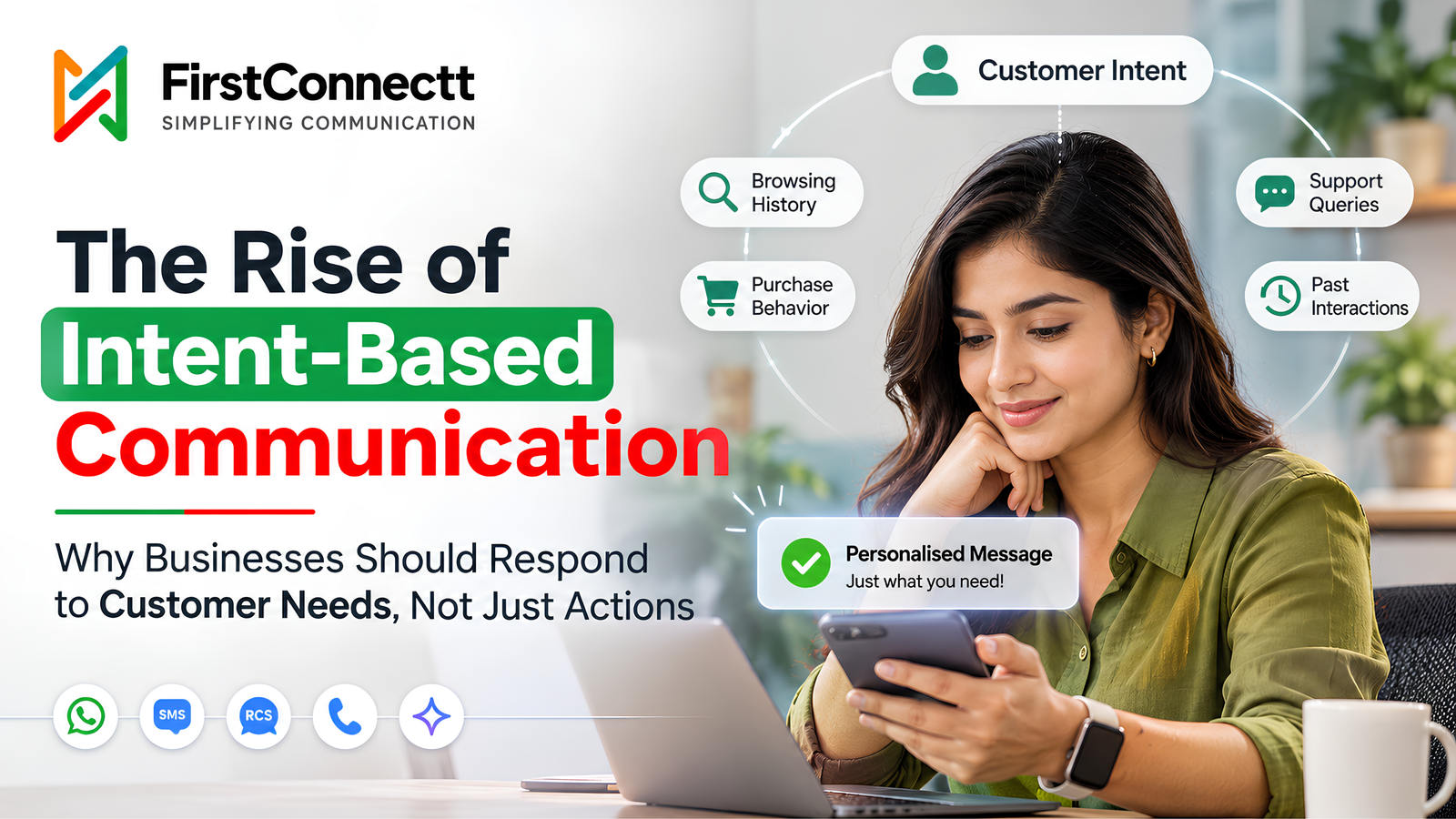
A customer who almost said yes. They didn’t ignore you. They discovered you, liked you, and considered you. They were one step away from buying, but they never made the purchase. A reminder goes out right away. Yet the customer may only want to know about delivery, payment safety, or stock. Most automated messages respond to what customers do. Intent-based communication asks why they did it. Businesses that understand the need before choosing a message send fewer, better messages.
Here’s how that shift works, and why it matters.
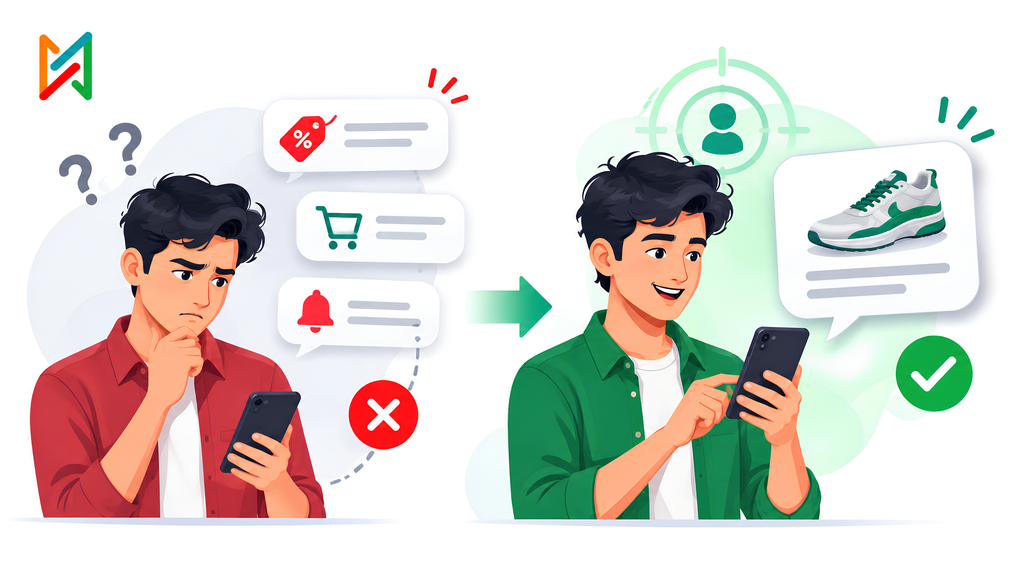
Most businesses run on triggers. A purchase, sign-up, abandoned cart, failed payment, or booking sets off an SMS, email, WhatsApp message, or call. This is fast and consistent. But it treats each action as a separate event, and an action doesn’t always show what the customer needs. Triggers still have value for OTPs, receipts, and alerts that must go out every time.
Baymard Institute’s 2025 research puts average cart abandonment above 70%, so that trigger fires constantly. An abandoned cart may mean the shopper needs product details, not a discount. A missed payment may point to a technical glitch, not a lack of funds. A customer who contacts support repeatedly needs a fix, not another automated acknowledgement.
People notice. McKinsey research (2021) found that 71% of consumers expect personalised interactions, and 76% get frustrated when they don’t get them. Businesses need to look past the trigger and consider the context behind each interaction.
Intent-based communication uses behaviour, interaction history, preferences, and available context to understand what a customer may need. Four inputs matter. Customer behaviour covers browsing, clicks, purchases, and repeated actions. Interaction history covers earlier conversations, support requests, and replies. Customer context covers order status, account details, and service needs. Communication purpose asks whether the customer needs information, help, confirmation, or action.
| Event-based messaging | Intent-based communication |
| Responds to a specific action | Considers the need behind the action |
| Uses predefined triggers | Uses available context and signals |
| Often follows fixed workflows | Can adapt the next interaction |
| Focuses on sending messages | Focuses on making communication relevant |
This isn’t guessing what customers think. It means using reliable signals and relevant information to make better decisions.
Customer intent analysis draws on four kinds of signals.
Behavioural signals: repeated product searches, several visits to a pricing page, abandoned applications, or frequent order checks.
Conversation signals: questions asked through WhatsApp, voice calls, chatbots, or support channels.
Transactional signals: payment status, subscription renewals, order updates, and service requests.
Historical signals: earlier complaints, preferred channels, and past interactions.
Take a customer who checks a loan application status several times. They probably don’t need another promotion. They need a clear update, or information about missing documents. Combining signals shows the immediate requirement. A repeat visit to a pricing page may mean a buyer is comparing plans, or is simply confused by the price.
One click or browsing action isn’t proof of intent. Interpret intent with relevant context and appropriate data.
Context-aware communication makes messages more useful in four ways. Timing means sharing information when it fits the customer’s situation. Channel selection means choosing a channel based on preferences, consent, and the type of interaction. Message relevance means sharing what connects to the actual need. Conversation continuity means using interaction history so customers don’t repeat themselves.
According to research, 56% of customers have to repeat or re-explain information to different representatives. Continuity fixes that. Channel choice matters too. Some customers prefer WhatsApp for updates, while others want a call for urgent issues.
Consider a customer asking about a delayed delivery. Instead of a generic acknowledgement, the system uses order information to give a status update or point to the right support process. A connected setup can do this on channels such as the WhatsApp Business API. Context-aware communication links customer information with workflows, and it prevents repetitive, irrelevant, disconnected messages.
AI-powered customer communication helps businesses understand needs at scale.
Natural language processing helps systems read customer questions. Intent classification sorts requests into information, complaint, help, or transaction. Next-step recommendations pick a response from available data and business rules. Automated workflows start actions, send updates, or route complex cases to people. Continuous improvement uses interaction data to spot repeat questions and refine workflows.
Say a customer messages a bank asking why a transaction failed. An AI-enabled workflow identifies the issue type, checks permitted transaction data, and gives a next step or escalates. Conversational AI handles the exchange, and Agentic AI can take defined actions within set permissions.
AI should support communication decisions, not run without limits. Human help stays important for sensitive, complex, or high-impact cases. Review AI replies often, and keep a clear route to a person.
Intent-driven communication needs more than a chatbot. Customer information must reach the right communication systems. Channels should support one connected journey. APIs can link messaging platforms with CRM, payment, order, and support systems. Automation should follow business rules, customer permissions, and the nature of the request. Human teams should be able to take over when automation can’t solve an issue.
A customer starts on WhatsApp, needs more help, and moves to a support executive. A connected workflow gives the executive the conversation context, so the customer doesn’t start over. Test each handover before launch. CPaaS solutions provide the layer that helps enterprises integrate channels and capabilities into existing systems and workflows.
Businesses moving this way need connected capabilities across channels and workflows. FirstConnectt is a CPaaS partner offering SMS, WhatsApp Business API, RCS, voice, Conversational AI, and Agentic AI. These capabilities help enterprises build communication experiences around their customer engagement needs. The focus is on enabling connected communication, not on a platform that automatically understands every customer’s intent.
Responsible data use comes first. Collect only what a clear business purpose needs. Get appropriate consent before promotional or other consent-dependent messages. Respect channel preferences and opt-outs. Protect data with suitable security and access controls. Be open about how information is used. Avoid sensitive assumptions drawn from limited behavioural signals. Give customers a simple way to see and change their preferences.
More data doesn’t automatically mean better communication. Businesses need relevant, accurate, responsibly managed information. Rules vary by region and message type. Indian businesses should consider the Digital Personal Data Protection Act, 2023, where penalties can reach ₹250 crore for failing to keep reasonable security safeguards, along with TRAI’s messaging rules.
Personalised business communication should make communication more helpful, not make customers feel watched.
1. Identify common customer needs. Study frequent questions, complaints, and support requests.
2. Review existing triggers. Find where automated messages lack context.
3. Connect relevant data sources. Bring together CRM, transaction, and support data where appropriate.
4. Start with focused use cases. Try payment assistance, order updates, or application support first.
5. Introduce AI carefully. Use it for intent classification and suitable workflow automation.
6. Measure outcomes. Track resolution rates, satisfaction, repeat queries, and response times.
Start with a few clear use cases and improve them before expanding across channels. A sound customer communication strategy grows in steps. Review results monthly and keep what works.
Businesses don’t need to message more often to create better experiences. They need to communicate with more relevance. Moving from trigger-based messaging to intent-based communication makes interactions more useful, timely, and connected. It also supports automated customer engagement that customers actually welcome, because each message fits a real need. Start small, measure results, and protect customer trust along the way. The future of business communication will depend not only on what companies send, but on how well they understand what customers need. FirstConnectt helps enterprises build the connected foundation behind that shift, across messaging, voice, and AI.
It’s an approach that uses customer behaviour, interaction history, and available context to make communication more relevant to customer needs.
Trigger-based messaging responds to predefined actions. Intent-based communication considers the context and likely need behind those actions.
AI can analyse conversational inputs and signals to classify requests, recommend responses, and support automated workflows.
It can support banking, e-commerce, healthcare, logistics, education, and telecom, depending on communication needs.
Yes. It uses relevant customer information and signals. Businesses must handle them responsibly, with consent and safeguards.
Share this article
Article
 Article
 Article
Ready to put these ideas to work? Talk to our team about your communication stack.
Get Started →