
 Article
October 14, 2026
6 min read
 FirstConnectt
Enterprise communication insights
FirstConnectt
Enterprise communication insights
Article · FirstConnectt Insights
When a customer receives a text message from your business, they rarely stop to wonder what category it falls into. They simply expect one thing: that it’s relevant.
But behind every SMS lies an important distinction that businesses can’t afford to ignore.
Send a payment confirmation as a promotional message, and it may never reach the customer when they need it most. Send a marketing offer as a transactional SMS, and you could end up violating telecom regulations.
The difference between transactional SMS vs promotional SMS goes far beyond marketing. It affects message delivery, customer trust, compliance, campaign performance, and ultimately, your brand’s reputation.
If your business relies on SMS for customer communication, understanding these two message types is essential. This guide explains the differences in simple terms, highlights when to use each, and shares best practices to help you get the most from your SMS strategy.
Transactional SMS refers to messages sent to provide customers with important information related to a service, transaction, or account activity.
These messages aren’t intended to sell anything. Instead, they help customers complete or track an action they’ve already taken. Common examples include:
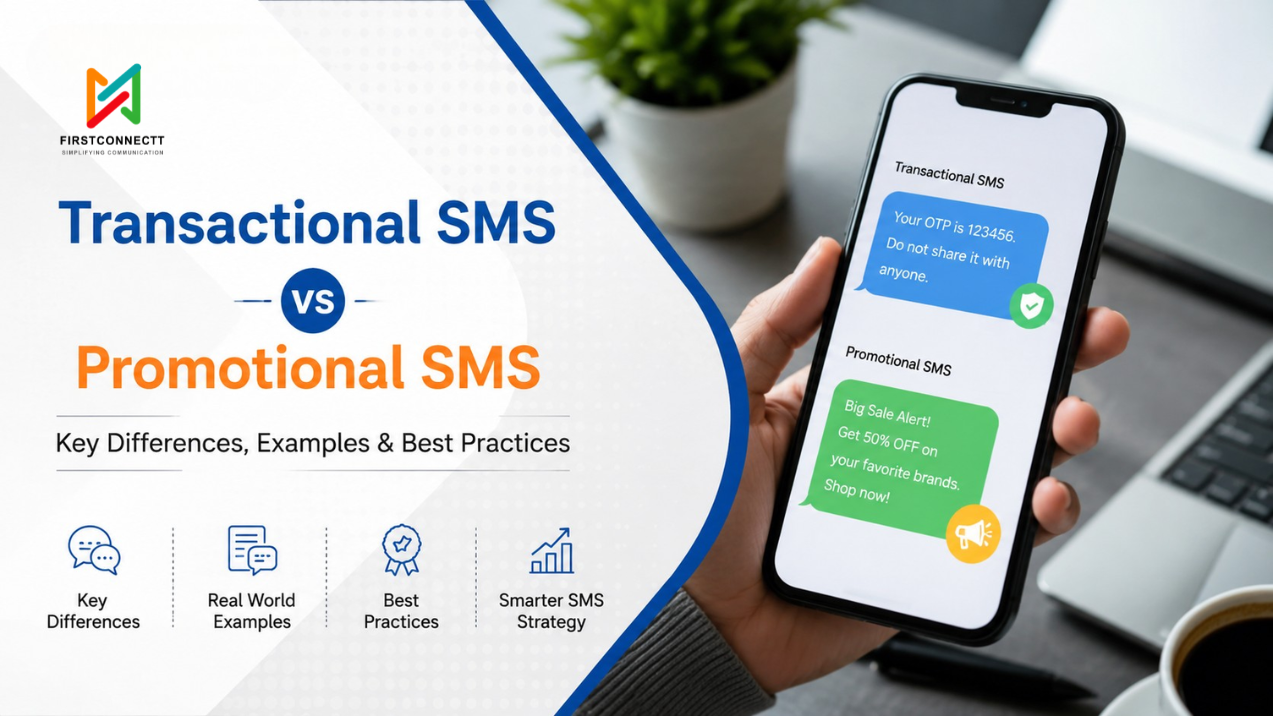
For example: “Your order #45873 has been shipped and will arrive tomorrow.”
Or: “Your OTP is 483219. Do not share this code with anyone.”
These messages deliver value because customers expect them. In many cases, they’re also time-sensitive.
Aside from this, businesses handling high volumes of transactional communication need a reliable messaging infrastructure behind these customer touchpoints. FirstConnectt helps businesses manage scalable SMS communication through its CPaaS platform. They support use cases such as OTPs, alerts, notifications, and customer updates.
Promotional SMS is designed to market products, services, offers, or events. Its primary objective is customer engagement and sales rather than providing essential information. Examples include:
Example: “Weekend Special! Get 25% OFF on all products. Use the code SAVE25 before midnight.”
Unlike transactional messages, promotional SMS aims to encourage customers to take action and make a purchase.
| Feature | Transactional SMS | Promotional SMS |
| Purpose | Share essential information | Promote products or services |
| Audience | Existing customers | Potential or existing customers |
| Content | Informational | Marketing-focused |
| Timing | Sent instantly after an action | Sent during campaigns |
| Delivery Priority | High | Standard |
| Customer Expectation | Expected | Optional |
| Compliance Rules | Different regulatory guidelines | Marketing regulations apply |
| Examples | OTPs, invoices, delivery updates | Discounts, offers, promotions |
At a glance, the difference seems simple. But choosing the wrong type can create significant operational and compliance issues.
Managing different types of customer messages becomes easier when businesses have the right communication infrastructure in place. FirstConnectt provides SMS, WhatsApp, RCS, Voice, Email and Google Messaging solutions, helping businesses build communication journeys around their specific customer needs.
Many businesses assume SMS is just another messaging channel. It isn’t.
Every message serves a different customer expectation. Imagine receiving a password reset code two hours late because it was treated like a marketing campaign. Or receiving five promotional offers every day from brands you’ve never interacted with.
Neither creates a positive customer experience. Using the correct SMS category ensures:
The right communication channel can make a major difference to the customer experience. Whether it is an OTP, delivery update, promotional message or support interaction, businesses need communication that is timely and dependable. FirstConnectt ensures brands connect with customers across multiple channels through a unified CPaaS approach.
Transactional SMS should be used whenever customers need information that helps them complete or manage an interaction. Ideal scenarios include:
The common thread is simple. These messages solve problems rather than create sales opportunities.
Promotional SMS works best when your goal is customer engagement. Use it for:
Announce new arrivals, services, or features.
Create urgency with flash sales and exclusive discounts.
Reward loyal customers with personalized promotions.
Invite customers to webinars, product launches, exhibitions, or workshops.
Promotional SMS is particularly effective because it reaches customers instantly, often outperforming email for time-sensitive campaigns.
Imagine an online fashion retailer.
After a customer places an order, they receive:
Your order has been confirmed.
A day later: Your package is out for delivery.
A week after delivery: …
Complete your look with matching accessories. Get 20% OFF today. Each message has a different purpose. Mixing them would confuse customers and weaken communication effectiveness.
Critical messages need to arrive quickly.
Transactional SMS is designed for essential communication where timing matters.
Customers appreciate receiving instant confirmations after making payments or placing orders.
It reduces uncertainty.
Keeping customers informed minimizes support inquiries.
Instead of asking,
“Where’s my order?”
they already know.
Many workflows rely on automated SMS notifications to function efficiently.
Well-timed offers encourage customers to make purchases they may have postponed.
Personalized promotions bring previous customers back.
Compared to many advertising channels, SMS campaigns often deliver excellent returns due to high visibility.
Most text messages are read within minutes, making SMS ideal for urgent promotions.
Even experienced businesses occasionally misuse SMS.
Some common mistakes include:
Adding marketing offers to an OTP message can confuse customers and may violate applicable regulations.
Frequency matters.
Too many messages often lead to customer opt-outs.
Sending promotional messages late at night or during inconvenient hours damages customer experience.
Customers respond better to personalized communication than broad, one-size-fits-all campaigns.
Different regions have different rules regarding consent, sender IDs, and promotional messaging.
Businesses should always stay updated with local telecom regulations.
SMS has limited space.
Every word should add value.
Using the customer’s name or referencing recent purchases increases relevance.
Tell recipients exactly what to do next.
Examples:
Different customers have different needs.
Sending relevant messages improves engagement.
Track metrics such as:
Data helps improve future campaigns.
Ask yourself one simple question before sending any message:
“Am I helping the customer complete something, or am I encouraging them to buy something?”
If you’re helping them, it’s likely transactional.
If you’re promoting something, it’s promotional.
Keeping this distinction clear improves customer satisfaction and keeps your communication strategy organized.
SMS continues to be one of the most dependable communication channels because it doesn’t rely on internet connectivity, app installations, or email inbox visibility.
Today, businesses often combine transactional SMS with channels like WhatsApp, email, push notifications, and voice calls to create a seamless customer experience. Critical updates are delivered through transactional SMS, while promotional campaigns are coordinated across multiple touchpoints for greater reach and engagement.
This omnichannel approach ensures customers receive the right message through the right channel at the right time.
Generally, businesses should avoid adding promotional content to transactional messages. Keeping these messages focused on essential information improves clarity and helps maintain compliance with applicable regulations.
Both transactional and promotional SMS generally achieve very high visibility compared to many digital channels. However, transactional messages are typically opened immediately because customers are actively expecting them.
In many jurisdictions, promotional SMS requires prior customer consent. Requirements vary by country, so businesses should follow the applicable telecom and privacy regulations in their operating regions.
Yes. Personalized promotions, loyalty rewards, and exclusive offers can encourage repeat purchases and strengthen long-term customer relationships.
Industries including banking, e-commerce, healthcare, logistics, education, travel, hospitality, and financial services commonly rely on transactional SMS for time-sensitive customer communication.
The debate around transactional SMS vs promotional SMS isn’t about choosing one over the other. Successful businesses use both strategically.
Transactional SMS builds trust by delivering timely, essential information that customers depend on. Promotional SMS drives growth by creating awareness, encouraging purchases, and keeping customers engaged.
When each message serves the right purpose, customers receive relevant communication instead of unwanted interruptions. The result is stronger relationships, better campaign performance, and a communication strategy that supports both customer satisfaction and business growth.
In today’s competitive landscape, effective messaging isn’t just about reaching customers. It’s about reaching them with the right message at exactly the right moment.
Modern customer communication is no longer about choosing a single channel. Businesses increasingly need to connect with customers through the channels they already use. FirstConnectt brings SMS, WhatsApp, RCS, Voice, Email and other communication solutions together to help businesses create connected customer journeys.
Share this article
Article
 Article
 Article
Ready to put these ideas to work? Talk to our team about your communication stack.
Get Started →