
 Article
October 14, 2026
6 min read
 FirstConnectt
Enterprise communication insights
FirstConnectt
Enterprise communication insights
Article · FirstConnectt Insights
Customer expectations have changed dramatically. People no longer want to wait for updates, wonder whether their order has shipped, or keep refreshing an app to check if a payment went through. They expect businesses to keep them informed automatically.
That’s where real-time notifications make all the difference.
Whether it’s a bank confirming a transaction within seconds, a food delivery app announcing that your order is two minutes away, or an airline alerting passengers about a gate change, timely notifications reduce uncertainty and build confidence.
For businesses, real-time notifications aren’t simply about sending messages. They’re about creating experiences that make customers feel informed, valued, and in control. Companies that master this communication often see stronger customer relationships, fewer support requests, and higher retention rates.
Let’s explore how real-time notifications improve customer experience and why they’ve become an essential part of modern customer engagement.
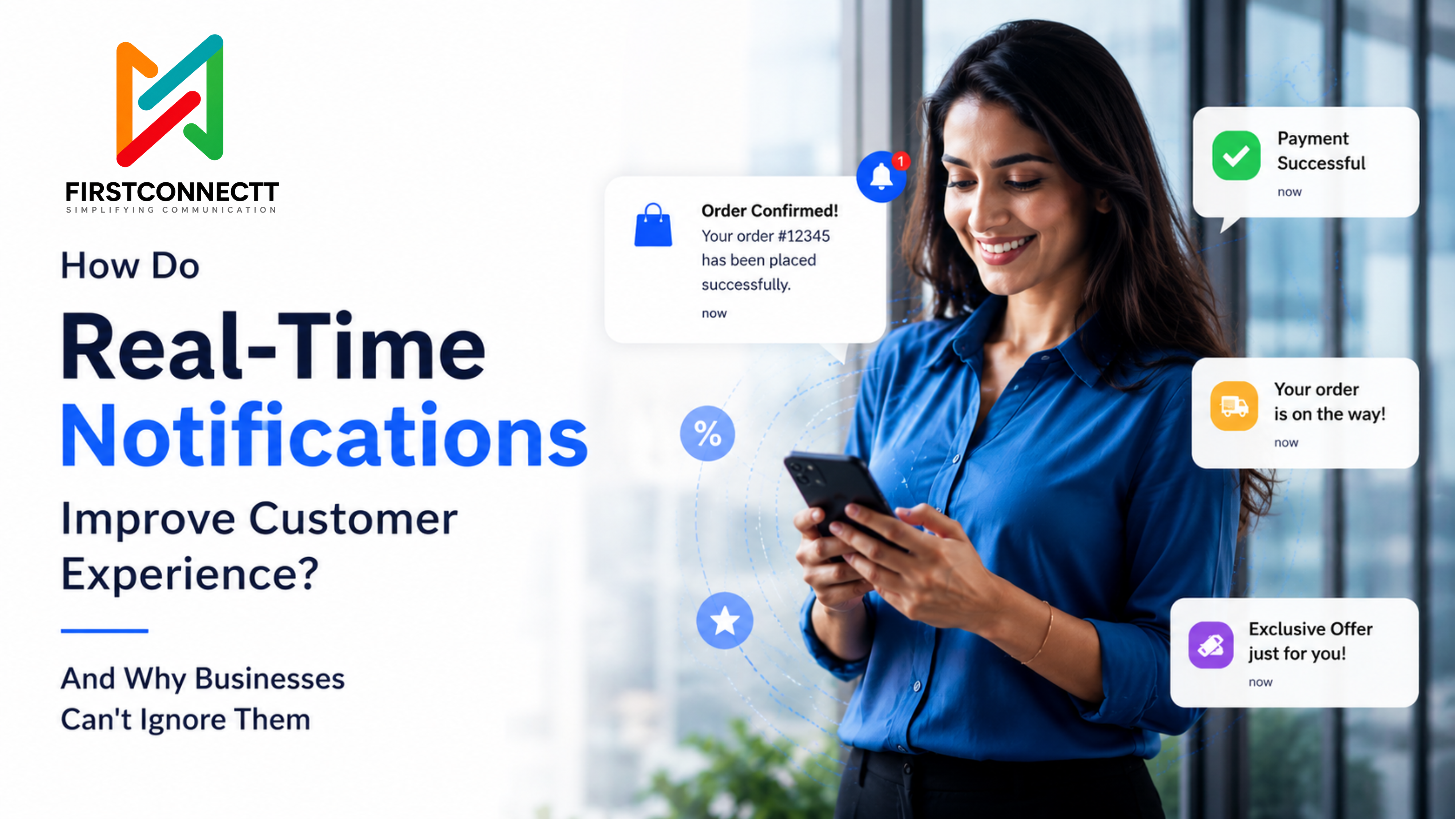
Real-time notifications are instant messages delivered to customers the moment an important event occurs. These updates can be sent through multiple communication channels, including:
Unlike scheduled marketing campaigns, these notifications are triggered by customer actions or system events, ensuring the information is always relevant and timely.
Common examples include:
The goal isn’t to send more messages. It’s to send the right information at the right moment.
All in all, when timing matters, reliable delivery becomes essential. FirstConnectt helps businesses support timely communication so important customer updates reach them when they matter most.
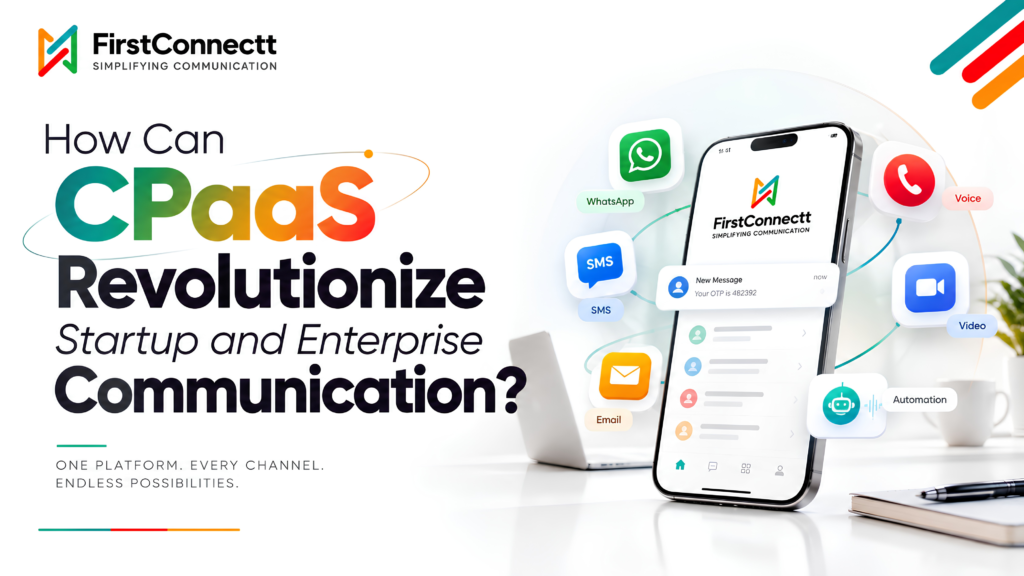
CPaaS (Communications Platform as a Service) helps businesses connect communication channels such as SMS, WhatsApp, RCS, and Voice with their existing systems.
When an important event occurs, such as a payment, order confirmation, login attempt, or delivery update, CPaaS can automatically trigger a notification through the appropriate communication channel.
This allows businesses to automate customer communication without manually sending every update. It also helps them manage different communication channels through a connected infrastructure.
For example, when a customer completes a payment, the system can automatically trigger a confirmation message. When an order is shipped, another notification can be sent with the latest delivery status.
This makes real-time communication faster, more automated, and easier to manage at scale.
For businesses handling high volumes of customer interactions, CPaaS can provide the communication layer needed to connect events, channels, and customer journeys more efficiently. FirstConnectt supports this approach through communication solutions across SMS, WhatsApp, RCS, Voice, and AI-powered experiences.
Best placement: Put this section right after “What Are Real-Time Notifications?” and before “Why Speed Matters in Customer Experience.” It creates a natural flow:
What are notifications? → How CPaaS enables them → Why speed matters → Benefits → Industry examples.
Imagine ordering an expensive smartphone online.
You complete the payment…
Then nothing happens.
Five minutes pass.
Ten minutes pass.
No confirmation.
Even if everything is working perfectly behind the scenes, many customers begin questioning whether the payment was successful.
Now imagine receiving an instant notification:
“Your payment has been received. Your order is confirmed and is now being prepared for dispatch.”
That single message immediately removes uncertainty.
Speed creates reassurance.
And reassurance builds trust.
Customers appreciate transparency.
When businesses proactively share updates, customers don’t have to guess what’s happening.
Real-time notifications demonstrate that the company values communication.
Examples include:
Every notification acts as proof that progress is happening. Over time, these small interactions strengthen customer confidence.
One of the biggest causes of frustration is uncertainty. Questions like these constantly arise:
Instant updates eliminate unnecessary stress. Customers remain informed without having to contact support or repeatedly check the app.
A smooth experience isn’t only about product quality. Communication plays an equally important role. Customers remember businesses that keep them informed throughout their journey. Even when delays occur, timely updates help maintain satisfaction.
For example: Instead of discovering a delayed delivery after waiting all day, customers receive a notification explaining the situation along with a revised delivery estimate.
Transparency often matters more than perfection.
Many customer support requests revolve around simple questions:
Real-time notifications answer these questions before customers need to ask them. This creates a win-win situation:
Businesses often see significant reductions in repetitive support queries after implementing automated notifications.
Fewer repetitive queries start with better communication. FirstConnectt helps businesses deliver timely updates that keep customers informed and reduce unnecessary back-and-forth with support teams.
Customers don’t want generic updates. They want messages that are relevant to them. Real-time notifications can include:
Relevant communication feels helpful rather than intrusive.
Security notifications have become essential across banking, fintech, healthcare, and eCommerce. Examples include:
Immediate alerts allow customers to respond quickly if unauthorized activity occurs. The faster the notification, the better the protection.
Security alerts cannot afford unnecessary delays. With FirstConnectt, businesses can strengthen important communication journeys with reliable messaging designed for time-sensitive customer interactions.
Well-timed notifications encourage customers to return. Examples include:
When notifications deliver genuine value instead of constant promotions, customers are more likely to engage.
Customers receive updates for:
Each notification reduces uncertainty and keeps customers informed.
Banks use instant notifications for:
These updates improve both convenience and security.
Hospitals and clinics send:
Patients stay informed without making repeated phone calls.
Courier companies notify customers about:
Real-time tracking has become an expected service rather than a premium feature.
Airlines and travel companies use notifications for:
Timely communication reduces travel stress significantly.
Even helpful notifications can become frustrating when handled poorly. Some common mistakes include:
Constant alerts quickly become noise. Businesses should focus on meaningful updates rather than excessive messaging.
A payment confirmation arriving twenty minutes late creates confusion instead of reassurance. Timing is everything.
Messages like: “Your request has been processed.” offer very little value.
Instead, provide context. “Your order #45872 has been shipped and is expected to arrive tomorrow.” Specificity improves customer confidence.
An OTP should arrive instantly via SMS or WhatsApp. A monthly newsletter can wait for email. Choosing the appropriate communication channel improves effectiveness.
Overall, delayed messages, generic updates, and poor channel choices can hurt the experience. FirstConnectt helps businesses build more reliable communication journeys without adding unnecessary complexity.
Businesses that deliver exceptional customer experiences follow several best practices.
Customers should understand the message within seconds. Avoid unnecessary technical language.
Real-time means real-time. System delays reduce customer confidence.
Include relevant customer information whenever possible. Personalization increases engagement while making communication feel more human.
Ask one simple question before sending any notification: “Does this genuinely help the customer?”
If the answer is no, reconsider sending it.
Allow customers to choose:
Giving users control improves long-term engagement.
Businesses looking to improve notification strategies should also consider:
The best notification systems feel invisible because they deliver exactly what customers need without overwhelming them.
Customer expectations will only continue to rise. Businesses are increasingly moving toward:
Customers won’t simply expect faster communication. They’ll expect businesses to anticipate their needs before they ask.
Organizations that invest in intelligent, real-time communication today will be better positioned to deliver the best customer experiences tomorrow.
Real-time notifications are no longer just a convenience they are an essential part of delivering a connected customer experience. From payment confirmations and OTPs to delivery updates, security alerts, and appointment reminders, timely communication helps customers stay informed, confident, and in control at every stage of their journey.
For businesses, the value goes beyond simply sending messages. The right notification, delivered through the right channel at the right moment, can build trust, reduce uncertainty, improve engagement, and reduce unnecessary support interactions.
As customer expectations continue to rise, businesses need communication that is not only fast but also reliable, personalized, and connected across channels. This is where modern communication platforms and CPaaS solutions play an increasingly important role.
FirstConnectt helps businesses simplify real-time customer communication across channels such as SMS, WhatsApp, RCS, Voice, and AI-powered solutions enabling more responsive and connected customer experiences.
Because in modern customer communication, timing isn’t just part of the experience it is the experience.
Real-time notifications are instant messages sent to customers immediately after an important event, such as a payment, order confirmation, delivery update, or security alert.
They keep customers informed, reduce uncertainty, build trust, improve satisfaction, lower support requests, and provide timely information when it matters most.
The best channels include SMS, WhatsApp, push notifications, email, and in-app messaging. The right choice depends on the urgency and type of notification.
They improve communication, strengthen customer relationships, reduce operational costs, increase engagement, and enhance the overall customer journey.
eCommerce, banking, healthcare, logistics, travel, education, insurance, and subscription-based businesses all benefit significantly from instant customer communication.
Share this article
Article
 Article
 Article
Ready to put these ideas to work? Talk to our team about your communication stack.
Get Started →