
 Article
October 6, 2026
7 min read
 FirstConnectt
Enterprise communication insights
FirstConnectt
Enterprise communication insights
Article · FirstConnectt Insights
Business Communication Is Moving Beyond Messages
Businesses once relied on SMS, email, and phone calls to reach customers, and little more. Communication now touches nearly every part of the customer journey, from a first enquiry to long-term support. People expect fast replies, relevant updates, and secure transactions across whichever channel they choose. CPaaS is becoming the infrastructure businesses use to hold all of this together.
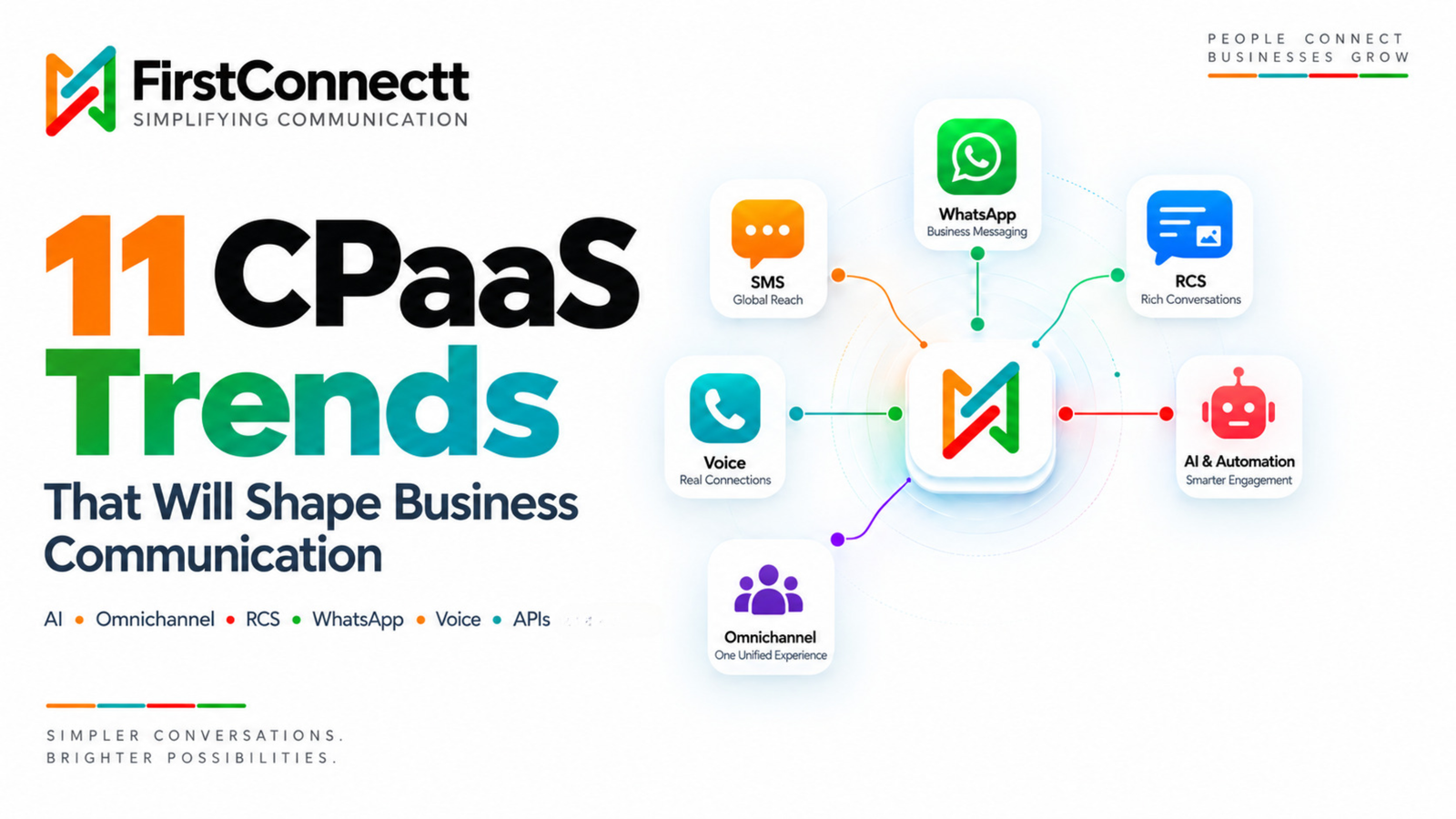
This blog covers eleven trends shaping where business communication is headed next.
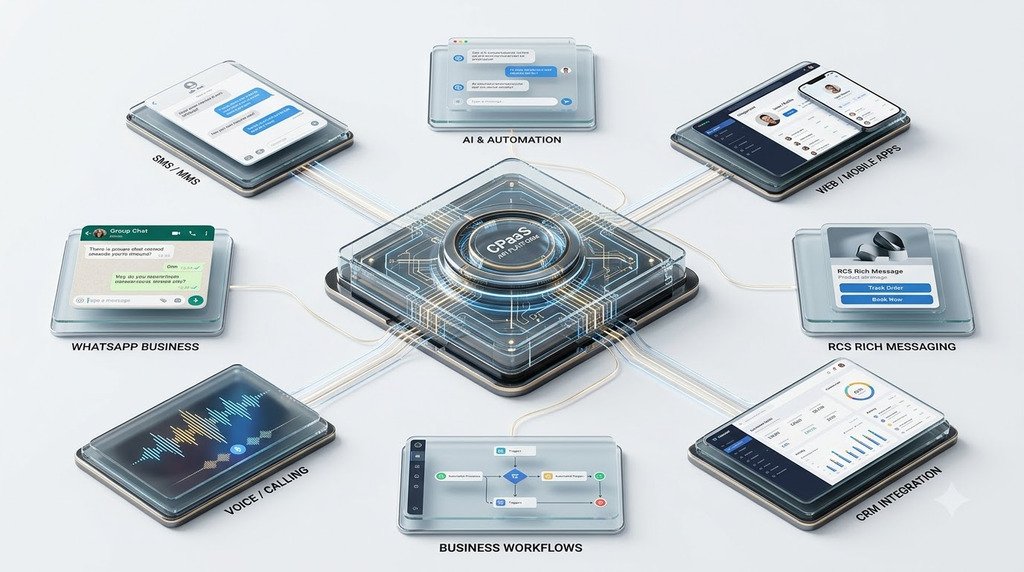
Communication Platform as a Service, or CPaaS, gives businesses the infrastructure to add messaging, voice, and AI into their own apps and workflows through APIs. Instead of building every communication function from scratch, a business connects to a platform that already handles the heavy lifting.
CPaaS integrates with websites, apps, CRMs, and other business systems, supporting messaging, voice, AI, and automation from one place. This matters most at scale, where reliability and flexibility become harder to manage alone. CPaaS is no longer just a messaging tool. It is becoming a full communication infrastructure layer, valued at $14.9 billion globally in 2025 according to IMARC Group, with steady growth projected through the next decade.
AI is becoming a core part of business communication, through chatbots, conversational AI, automated support, and intelligent message routing. Businesses use it to answer common questions, guide customers, and handle repetitive tasks. Personalised recommendations and intelligent routing are becoming common examples of this shift.
AI shouldn’t replace every human interaction, though. Complex or sensitive conversations still need a person. AI will make communication faster, but only when businesses use it responsibly.
Conversational AI mostly answers questions. Agentic AI goes further, taking the next step within defined permissions, such as scheduling appointments, checking order status, creating support tickets, or initiating refunds.
This trend makes customer journeys more automated, but it also raises the stakes. Businesses need strong controls around permissions, identity, spending limits, and human approval. The future depends on what AI can safely do, not just what it says.
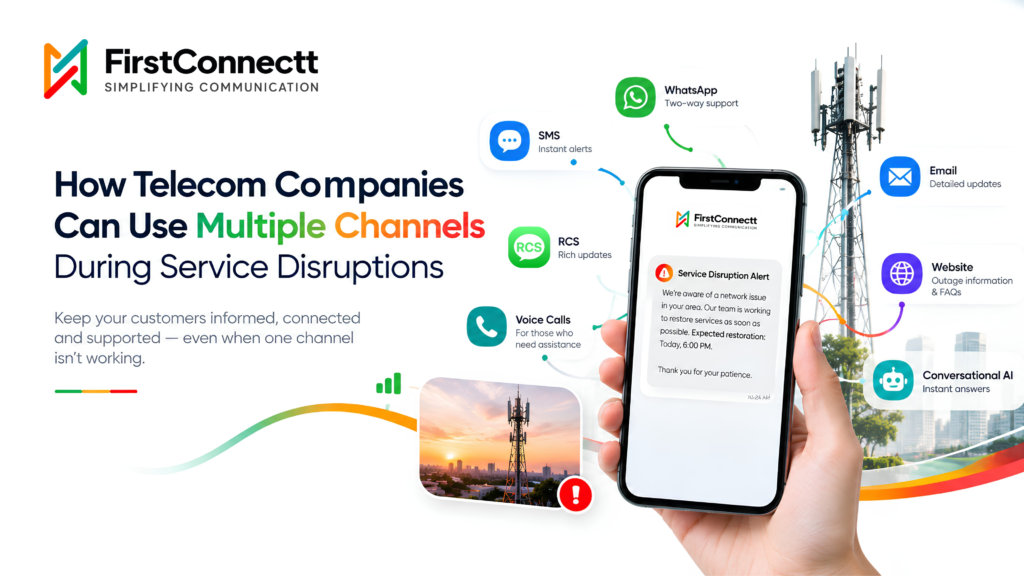
Customers don’t think in terms of business channels. They might discover a product on WhatsApp, receive an OTP by SMS, get an update through RCS, then speak to a voice agent. This shift also reduces repeated information customers have to give across different channels.
Multichannel means using several channels separately. Omnichannel means those channels work together, sharing context. CPaaS helps connect them through common infrastructure and APIs.
Rich Communication Services, or RCS, goes beyond plain SMS with branded sender profiles, rich media, product carousels, and buttons. Businesses use it for product discovery, order tracking, banking updates, and support.
Juniper Research expects global RCS business traffic to surpass 200 billion messages by 2027, up from around 70 billion in 2025. RCS won’t replace SMS entirely. The two will work together depending on reach, device support, and use case.
Businesses increasingly use WhatsApp for support, enquiries, order confirmations, payment reminders, and marketing. Automation on this channel reduces response time and manages repetitive queries well. It also plays a growing role in conversational commerce, turning chats into completed purchases.
WhatsApp alone can’t cover every interaction. Businesses still need SMS for urgent alerts, voice for complex support, and AI for automation. WhatsApp works best as one part of a larger strategy.
Traditional IVR depends on fixed menus and keypad inputs. Voice AI understands natural language and responds to what a customer actually needs, covering support, appointment booking, payment reminders, and lead qualification. This also frees human agents to focus on more complex calls.
It helps businesses manage high call volumes and offer support beyond standard hours. Clear escalation paths still matter, since some conversations need a human voice.
APIs connect communication services to websites, mobile apps, CRM systems, ERP platforms, and payment tools. Businesses increasingly expect faster implementation, better documentation, real-time delivery reports, and easy channel switching. Strong security and scalable infrastructure remain non-negotiable as usage grows.
Nobody wants to rebuild their communication systems every time they add a new channel. Flexible APIs let businesses adapt quickly instead of starting over.
Personalisation is moving past simply adding a customer’s name. Businesses increasingly use context like previous interactions, purchase history, preferences, and support history to shape messages.
A customer who just raised a complaint shouldn’t get an unrelated promotional message right after. CPaaS platforms can help connect this data across channels, though personalisation always needs to stay balanced with privacy and consent.
Sending a message is only part of the job. Businesses also need to manage delivery speed, API uptime, routing, and error handling. Failover systems and constant monitoring reduce the risk of undetected outages.
An OTP that arrives late can affect login, payment, or trust in the brand. Intelligent routing helps businesses pick the best path based on delivery performance, geography, and channel.
Communication platforms handle sensitive information: OTPs, phone numbers, payment alerts, and identity details. Businesses need to focus on consent, data protection, secure APIs, access controls, and opt-out management.
Requirements differ by industry and region, so this needs ongoing attention rather than a one-time fix. Trust is becoming as important as speed and convenience in business communication.
Businesses are moving beyond basic delivery reports toward understanding response rates, engagement, conversion, and customer drop-offs. These patterns also reveal where support resolution time needs improvement.
SMS often suits urgent alerts. WhatsApp supports full conversations. RCS aids product discovery. Voice handles complex issues, and AI manages repetitive questions. Communication data helps businesses make better channel decisions instead of guessing.
Taken together, these trends point toward business communication that is more connected, intelligent, personalised, measurable, and secure. SMS, WhatsApp, RCS, voice, email, and AI will increasingly work as one system instead of separate tools. AI will help businesses understand intent and automate the right actions, while messages shift from generic segments to real customer context.
The biggest shift is moving from isolated communication tools toward connected communication infrastructure. Communication stops being a separate support function and becomes part of customer experience, sales, service, and retention.
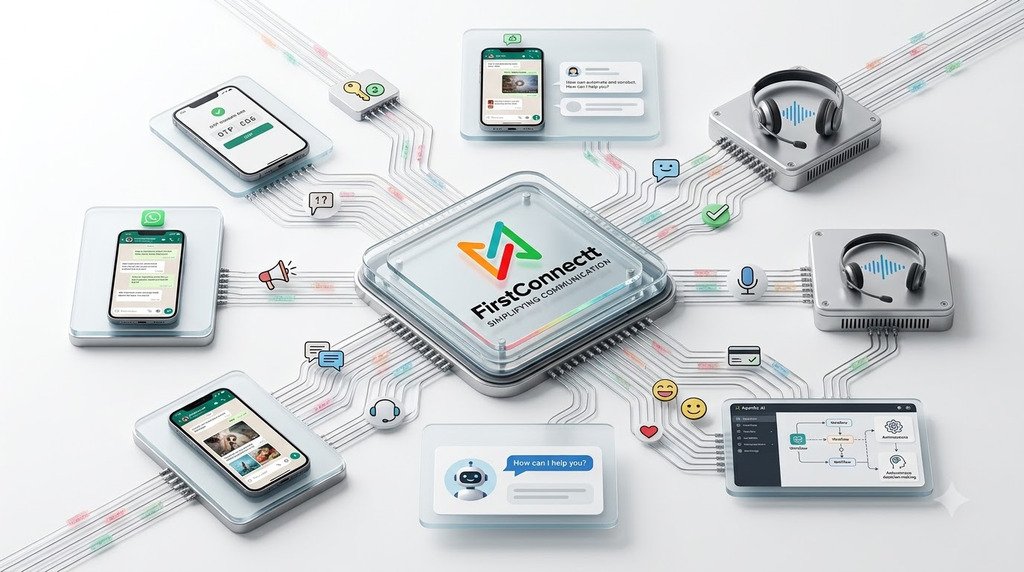
Modern businesses need more than individual messaging tools. They need a reliable communication partner that brings every customer interaction together.
FirstConnectt helps enterprises build connected communication journeys across A2P messaging, SMS, WhatsApp Business API, RCS, Voice and Cloud Telephony, Conversational AI, and Agentic AI.
From authentication and alerts to customer engagement, support, and automation, FirstConnectt brings essential communication capabilities together through one connected CPaaS infrastructure.
The focus is not simply on sending more messages. It is on helping businesses communicate with greater speed, flexibility, visibility, and scalability—while creating consistent customer experiences across every channel.
With FirstConnectt, communication becomes more than a collection of channels. It becomes connected business infrastructure built for today’s customer expectations and tomorrow’s opportunities.
CPaaS is moving beyond basic SMS and voice services into a full communication infrastructure layer. These eleven trends point toward communication that is more intelligent, connected, personalised, and customer-focused.
As businesses expand across digital channels, managing communication through separate tools can create delays, inconsistent experiences, and limited visibility. Customers do not think about which platform a business uses. They simply expect their messages, updates, and support interactions to work smoothly.
This makes connected communication more important than ever.
FirstConnectt helps enterprises build this connected communication layer across A2P messaging, SMS, WhatsApp Business API, RCS, Voice and Cloud Telephony, Conversational AI, and Agentic AI.
The goal is not just to send more messages. It is to help businesses deliver the right communication, through the right channel, at the right moment.
With FirstConnectt, communication becomes more than a collection of channels. It becomes reliable, scalable business infrastructure built for today’s customer journeys and tomorrow’s opportunities.
CPaaS, or Communication Platform as a Service, helps businesses integrate messaging, voice, and AI through APIs.
It connects communication channels, automates interactions, improves reliability, and supports communication at scale.
Key trends include AI-powered communication, agentic AI, omnichannel engagement, RCS, WhatsApp automation, Voice AI, and stronger security.
No. Modern CPaaS platforms support SMS, voice, WhatsApp, RCS, conversational AI, agentic AI, and email.
By connecting channels, improving API infrastructure, using automation responsibly, and focusing on security and customer experience.
Share this article
Article
 Article
 Article
Ready to put these ideas to work? Talk to our team about your communication stack.
Get Started →