
 Article
October 22, 2026
6 min read
 FirstConnectt
Enterprise communication insights
FirstConnectt
Enterprise communication insights
Article · FirstConnectt Insights
Business Messages Are Becoming More Than Notifications
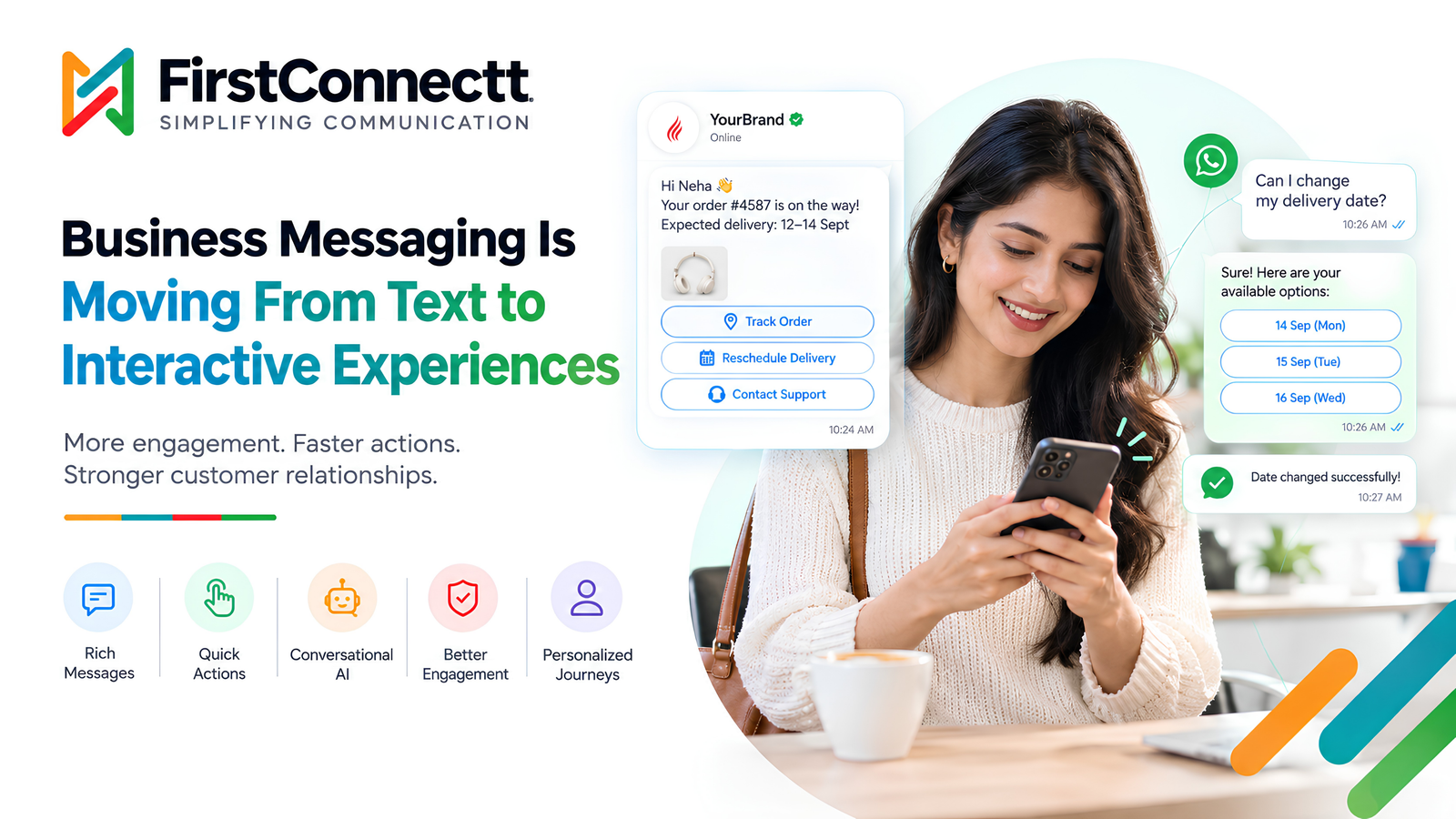
A shipping update used to read like this: “Your order has been shipped.” Nothing more. Today, that same message can include tracking details, a reschedule button, and a way to reach support instantly. Interactive business messaging reflects a bigger shift in how brands and customers talk to each other. Messages are no longer just carrying information. They’re becoming a place to discover, respond, and act.
Here’s why that change is happening now.
Traditional business messaging mostly delivers information: OTPs, order confirmations, payment alerts, appointment reminders, and delivery notifications. It tells the customer something and stops there.
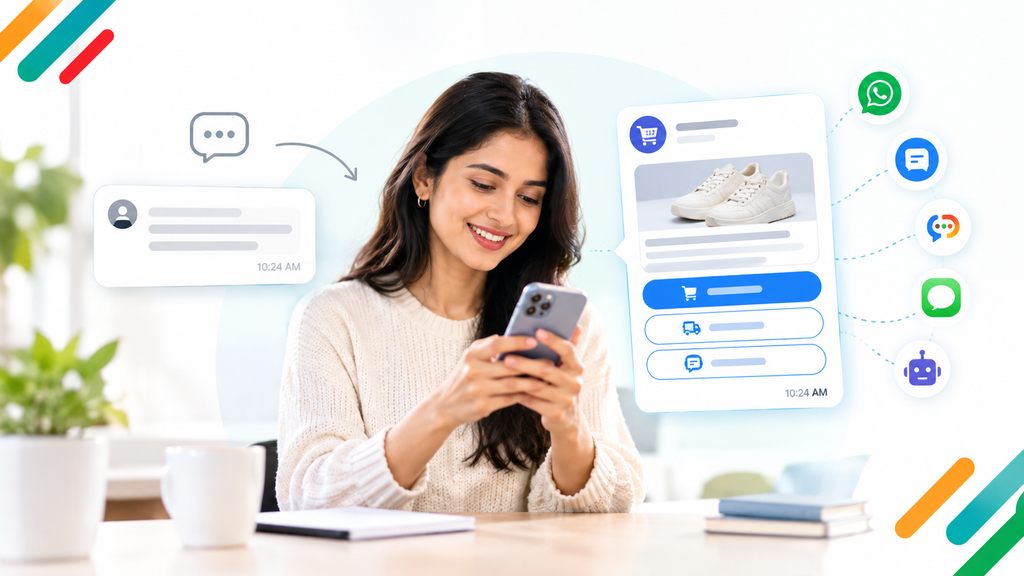
Interactive messaging adds room for the customer to respond or act right inside the same conversation, through buttons, suggested replies, rich media, carousels, or automated responses. What’s actually available depends on the channel, platform, and device.
Interactive doesn’t mean every message needs buttons or images. It means the experience matches what the customer actually needs to do next.
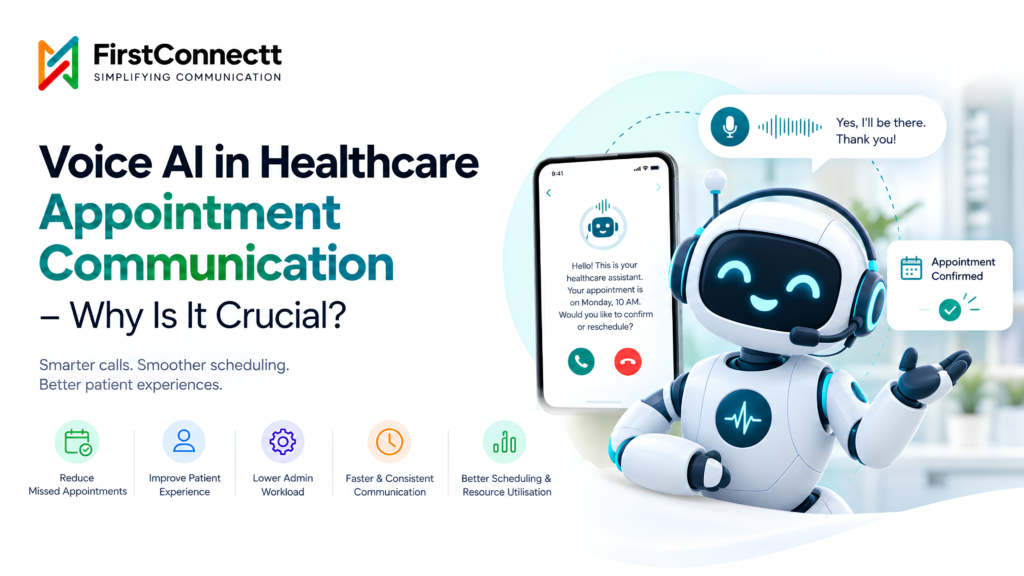
A plain appointment reminder might say: “Your appointment is tomorrow at 10 AM.” An interactive version can add options to confirm, reschedule, or contact support, right there.
The customer doesn’t need to open another app or search for a website. The same idea applies to order tracking, bookings, and payment reminders. Fewer steps make the journey more convenient, and interactive messaging is what moves customers from reading information to completing the next action.
People juggle multiple tasks across apps and want quick answers with clear next steps. A plain-text delay notice tells a customer their order is late, but not what to do about it.
An interactive version can present options like track order, change delivery preference, or request a callback. This reduces confusion, though convenience still depends on reliable delivery and responsive workflows behind the message.
Rich Communication Services, or RCS, brings branded profiles, rich media, suggested replies, buttons, and product carousels into everyday messaging. Retail uses it for product discovery, banking for guided support, and travel for booking details and reminders.
Studies found RCS delivers a 12% higher click-through rate, 18% higher conversion, and 38% higher average spend than SMS. RCS doesn’t replace SMS everywhere. Businesses often use both, depending on device support and reach.
WhatsApp Business API supports far more than promotional broadcasts: enquiries, product discovery, order tracking, appointment scheduling, and conversational commerce. A customer receives a product message, asks a question, gets an answer, selects an option, and moves toward purchase or support, all inside one thread.
WhatsApp works best connected to other business systems, becoming a conversational touchpoint rather than a standalone tool.
Traditional automated messages follow fixed formats. Conversational AI can understand a customer’s actual question and respond within defined boundaries, rather than offering only preset options.
A customer replying to a delivery notice with “can I change my delivery date?” can get guided through the available choices instead of a generic reply. This works best with clear controls, privacy protections, and a path to a human when needed.
Traditional commerce moves through several stages: ad, website, product page, checkout, confirmation. Interactive messaging compresses some of that into one conversation: discover, ask, compare, select, purchase, and receive updates.
Businesses can showcase products, answer questions, recommend options, and confirm orders, all inside the same thread. The actual checkout still depends on the platform and payment setup, but the movement between disconnected touchpoints shrinks considerably.
Sending more messages doesn’t automatically improve the customer experience. A large campaign can reach thousands of people and still deliver little value if the content isn’t relevant or actionable.
The right metric depends on the goal: an OTP should prioritise reliable, timely delivery, a product message should focus on engagement and conversion, and a support interaction should focus on resolution rather than reach.
Personalisation means more than adding a customer’s name. Relevant context, like previous interactions, purchase history, and service status, shapes what a message should actually say.
A customer who already bought a product shouldn’t receive the same discovery message again. Interactive messaging can also present different actions depending on the situation, though this only works when businesses respect consent and communication preferences along the way.
These patterns show up across several industries.
Transaction alerts, payment reminders, customer verification, and guided support, all requiring strong security, authentication, and regulatory controls.
Product discovery, promotional campaigns, order tracking, delivery updates, and customer support handled within the same conversation.
Appointment reminders, confirmation options, rescheduling requests, and support routing, focused on administration rather than medical advice.
Booking confirmations, travel reminders, check-in information, and service updates delivered through one connected thread.
Dispatch notifications, delivery tracking, delivery preferences, and support escalation, wherever timing matters most.
Across every stage, from discovery to post-purchase support, interactive messaging adapts to what the customer needs next.
The two approaches serve different purposes, and a short comparison makes that clear.
| Traditional Messaging | Interactive Messaging |
| Primarily delivers information | Delivers information and action options |
| Often one-way | Can support two-way interactions |
| Text-focused | May include rich media and interactive elements |
| Customer may need another platform | Can reduce steps for common actions |
| Limited response options | Buttons, replies, menus, or conversational assistance |
| Standalone notification | Connects with customer workflows |
Traditional messaging stays valuable for OTPs, alerts, and broad reach. Interactive messaging complements it with richer engagement where it fits. The two aren’t competing approaches. Businesses use both as part of one connected communication strategy.
A button or reply option is only one part of the experience. Whatever happens after a customer taps it needs to connect with real business systems.
CPaaS helps integrate SMS and A2P messaging, the WhatsApp Business API, RCS, voice and cloud telephony, conversational AI, agentic AI, CRM systems, and analytics into one workflow. A customer selects “track order,” an API checks the status, and the message returns tracking information automatically. Or a customer requests a callback, a workflow creates the request, and a voice team or AI starts the next step.
The value of CPaaS isn’t adding more channels. It’s connecting messaging, automation, and customer actions into one consistent experience.
Business messaging is shifting from simple notifications into connected customer experiences, and that shift needs infrastructure behind it. FirstConnectt helps enterprises connect communication across A2P messaging, SMS, the WhatsApp Business API, RCS, voice and cloud telephony, conversational AI, and agentic AI.
This supports different customer needs across discovery, authentication, engagement, support, and automation. A customer might get an SMS alert, continue on WhatsApp, interact through RCS, or connect with Voice AI for something more detailed.
With FirstConnectt, interactive communication becomes part of a broader infrastructure connecting every customer touchpoint.
Interactive messaging brings real opportunity, but it needs careful planning too.
1. Overcomplicated experiences: Too many buttons or options can confuse customers instead of helping them.
2. Irrelevant messages: Interactive features can’t fix poor targeting or messages sent at the wrong time.
3. Disconnected systems: A button only helps if the action behind it actually works reliably.
4. Privacy and consent: Businesses must respect applicable communication and data protection requirements at every step.
5. Accessibility: Different devices, capabilities, and channel preferences all need consideration, not just the newest features.
6. Fallback communication: Businesses need alternative channels ready when a preferred messaging experience isn’t available.
Future business messaging will likely combine rich media, AI-powered conversations, personalised actions, voice integration, and real-time analytics into fewer, more capable touchpoints.
The next step isn’t making messages look better. It’s making them more useful and closer to what the customer actually wants to do, whether that’s discovering a product, asking a question, or getting confirmation.
Businesses should balance automation with human support, convenience with security, and personalisation with privacy as this expands.
Business messaging is moving beyond simple text because customer expectations have changed. People want communication that’s convenient, relevant, and easy to act on, and RCS, WhatsApp, conversational AI, and Voice AI are helping businesses meet that shift. Interactive business messaging alone doesn’t create a great experience, though.
Businesses still need reliable delivery, connected workflows, and responsible automation behind every button and reply. FirstConnectt helps enterprises build that connected infrastructure across messaging, RCS, WhatsApp, voice, and AI, supporting experiences that move from notification to interaction, and from interaction to action. The goal isn’t better messages. It’s fewer steps for customers.
It combines information with features like buttons, suggested replies, rich media, and conversational responses.
Traditional SMS focuses on text, while interactive messaging supports richer content and direct customer actions.
RCS adds rich media, suggested replies, buttons, and branded business profiles, depending on device support.
Yes. The WhatsApp Business API supports conversations, automated responses, and customer support workflows.
CPaaS connects channels, APIs, and business systems so interactions can support relevant next steps.
Share this article
Article
 Article
 Article
Ready to put these ideas to work? Talk to our team about your communication stack.
Get Started →