
 Article
October 6, 2026
7 min read
 FirstConnectt
Enterprise communication insights
FirstConnectt
Enterprise communication insights
Article · FirstConnectt Insights
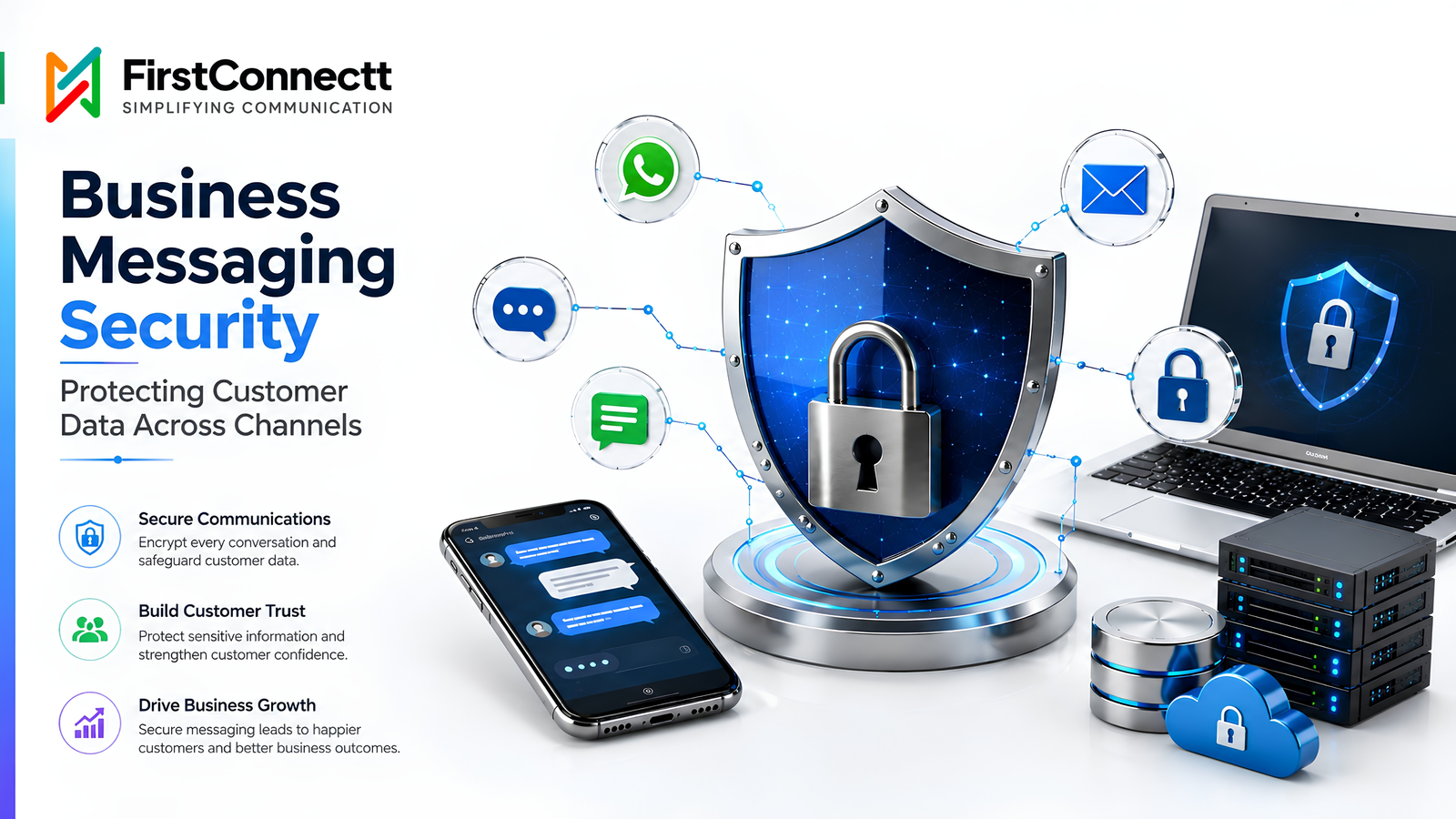
In today’s connected world, every customer interaction leaves behind a trail of valuable data. Whether it’s a WhatsApp support request, an SMS verification code, an email confirmation, or a live chat conversation, businesses handle sensitive information every second. The convenience of omnichannel communication has transformed customer experiences, but it has also expanded the attack surface for cybercriminals.
Here’s the reality: customers don’t just expect fast communication anymore. They expect secure communication.
One security breach can undo years of trust, trigger regulatory penalties, and damage a company’s reputation overnight. Businesses that prioritize messaging security aren’t simply protecting data. They’re protecting customer confidence, brand credibility, and long-term growth.
This guide explores everything businesses need to know about protecting customer data across communication channels while delivering seamless customer experiences.
Every digital conversation contains information that deserves protection.
Think about the types of information exchanged daily:
If attackers gain access to even a small portion of this information, the consequences can be severe.
Beyond financial losses, businesses may face:
As messaging channels continue expanding, protecting data across every touchpoint becomes a business necessity rather than an IT responsibility alone. FirstConnectt helps businesses keep these interactions connected, organised, and easier to manage.
Business messaging security refers to the technologies, policies, and practices that protect customer conversations from unauthorized access, manipulation, interception, or misuse.
It ensures that messages remain:
Security applies throughout the communication lifecycle, from the moment a customer sends a message until it’s archived or deleted.
Businesses rarely rely on a single messaging platform anymore.
SMS remains one of the most trusted channels for:
Because SMS is widely used, attackers frequently exploit SIM swapping and phishing techniques.
WhatsApp offers end-to-end encryption, but businesses still need to secure:
Misconfigured access permissions often become the weakest link.
Email remains essential for invoices, account updates, promotions, and support. Common threats include:
Strong authentication and email security protocols reduce these risks significantly.
Website chat systems collect customer details in real time.
Without proper encryption and authentication, attackers could intercept conversations or gain unauthorized access to chat histories.
Facebook Messenger, Instagram Direct Messages, Telegram, and similar platforms have become customer service channels.
Each platform introduces different security considerations regarding authentication, APIs, and user permissions.
Understanding the risks is the first step toward preventing them.
Cybercriminals impersonate trusted businesses to trick customers into revealing passwords, OTPs, or payment information. Even a convincing message can fool experienced users.
Weak passwords, credential reuse, or stolen login information allow attackers to access customer accounts.
Once inside, attackers may change passwords, steal personal information, or initiate fraudulent transactions.
Not every security risk comes from outside.
Employees with excessive permissions may accidentally or intentionally expose customer information. Proper access controls greatly reduce insider risks.
Business messaging platforms rely heavily on APIs.
Poor authentication, insecure endpoints, or outdated integrations create opportunities for attackers. API security should never be treated as an afterthought.
Attackers target centralized databases containing customer communication records.
Poor encryption, outdated software, or misconfigured cloud storage often contribute to these incidents.
Encryption ensures that only intended recipients can read messages.
Even if attackers intercept encrypted communications, the information remains unreadable without the proper keys.
Encryption should protect:
Passwords alone are no longer enough. Adding another verification layer dramatically reduces unauthorized access. Popular MFA methods include:
Not every employee needs access to every customer conversation. Assign permissions based on job responsibilities. For example:
This minimizes unnecessary exposure.
Every messaging integration should use:
Regular API testing helps identify vulnerabilities before attackers do.
Protecting messages while they’re being transmitted isn’t enough.
Stored customer information should also be encrypted inside databases, cloud storage, and backup systems.
Security isn’t a one-time setup. Businesses should monitor:
Early detection often prevents major incidents.
Many industries operate under strict privacy regulations.
Depending on location and industry, organizations may need to comply with regulations such as:
Compliance isn’t just about avoiding penalties. It demonstrates that customer privacy is taken seriously.
Connecting different communication channels can become complicated at scale. FirstConnectt helps businesses bring these interactions together through a more connected communication setup.
Before discussing sensitive information:
Collect only the information genuinely required. The less sensitive data stored, the lower the potential impact of a breach.
Technology alone won’t stop security incidents. Employees should recognize:
A well-trained team is one of the strongest defenses.
Outdated software often contains known vulnerabilities. Regular updates help close security gaps before they’re exploited.
Encrypted backups ensure business continuity after:
Recovery plans should be tested regularly.
Imagine an online retailer handling thousands of customer conversations every day. Customers receive:
Without centralized security policies, each channel becomes a separate point of vulnerability.
By implementing encrypted messaging, MFA, role-based access, secure APIs, centralized monitoring, and employee security training, the retailer creates a unified security strategy across every communication channel.
Customers enjoy a seamless experience while their information remains protected behind multiple layers of defense.
Many organizations invest heavily in communication platforms while overlooking basic security practices. Common mistakes include:
Small oversights often lead to the biggest security incidents.
Also, disconnected workflows can create unnecessary complexity. With FirstConnectt, businesses can simplify communication management without losing visibility across channels.
Security continues evolving alongside communication technology. Businesses should watch for:
Every user, device, and request must be verified continuously rather than trusted automatically.
Systems analyze user behavior to detect unusual activity before fraud occurs.
Machine learning helps identify suspicious messaging patterns faster than manual monitoring.
Biometrics and security keys reduce reliance on traditional passwords.
Customers increasingly expect transparency regarding how businesses collect, store, and use their data.
Organizations that prioritize business messaging security gain advantages beyond compliance. These include:
Security becomes a business advantage rather than simply an operational requirement.
Better communication requires more than reaching customers. FirstConnectt helps businesses coordinate channels, automate interactions, and create smoother communication experiences at scale.
Consistency matters more than isolated security investments.
Business messaging security refers to protecting customer conversations, personal information, and communication channels from unauthorized access, cyberattacks, and data breaches.
Protecting customer data helps prevent fraud, maintains customer trust, ensures regulatory compliance, and protects brand reputation.
Every communication channel should be secured, including SMS, WhatsApp, email, live chat, social messaging platforms, and mobile applications.
No.
Encryption is essential but should be combined with authentication, access controls, monitoring, employee training, and secure infrastructure.
Security should be continuously monitored, with formal reviews performed at least quarterly and after any significant infrastructure changes.
Every customer message represents more than a conversation. It represents trust.
Businesses invest enormous effort in acquiring customers, building relationships, and delivering exceptional service. All of that can be undermined if customer data isn’t adequately protected.
Strong business messaging security isn’t about creating barriers. It’s about creating confidence.
By combining encryption, authentication, secure APIs, employee awareness, regulatory compliance, and proactive monitoring, organizations can protect customer data across every communication channel while delivering the fast, seamless experiences customers expect.
As customer expectations evolve, communication infrastructure needs to keep pace. FirstConnectt helps businesses connect channels and build communication experiences designed for long-term growth.
Share this article
Article
 Article
 Article
Ready to put these ideas to work? Talk to our team about your communication stack.
Get Started →