
 Article
September 19, 2026
7 min read
 FirstConnectt
Enterprise communication insights
FirstConnectt
Enterprise communication insights
Article · FirstConnectt Insights
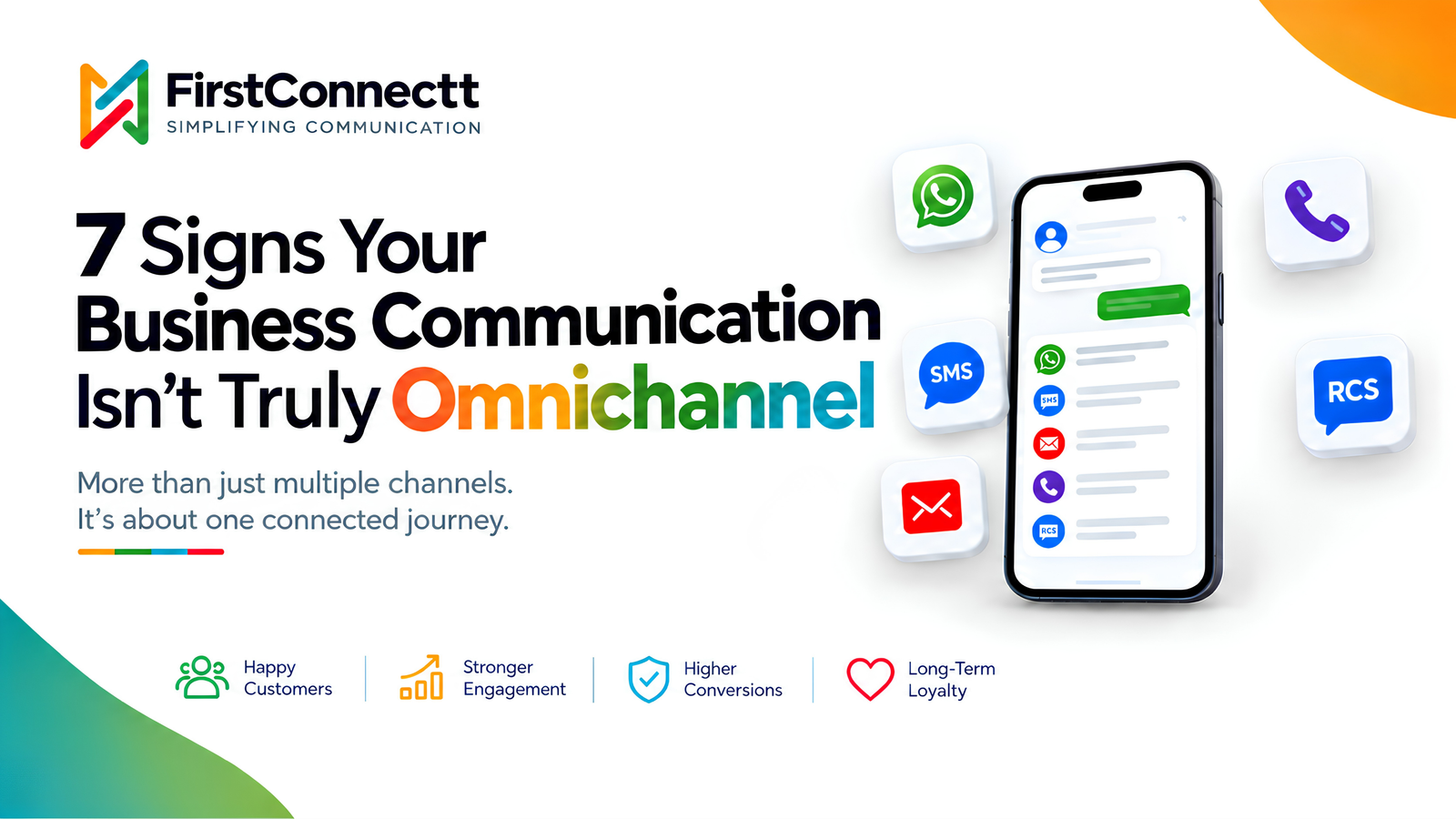
Using Multiple Channels Does Not Mean You Are Omnichannel.
Your business uses SMS, WhatsApp, email, voice, and RCS already. But can a customer move between them without repeating themselves? Many businesses assume that using several channels automatically means they’ve achieved something more advanced. Omnichannel communication actually depends on connection, not channel count. When systems and teams don’t share context, a customer’s journey falls apart the moment they switch channels.
Here are seven signs your setup might still be multichannel.
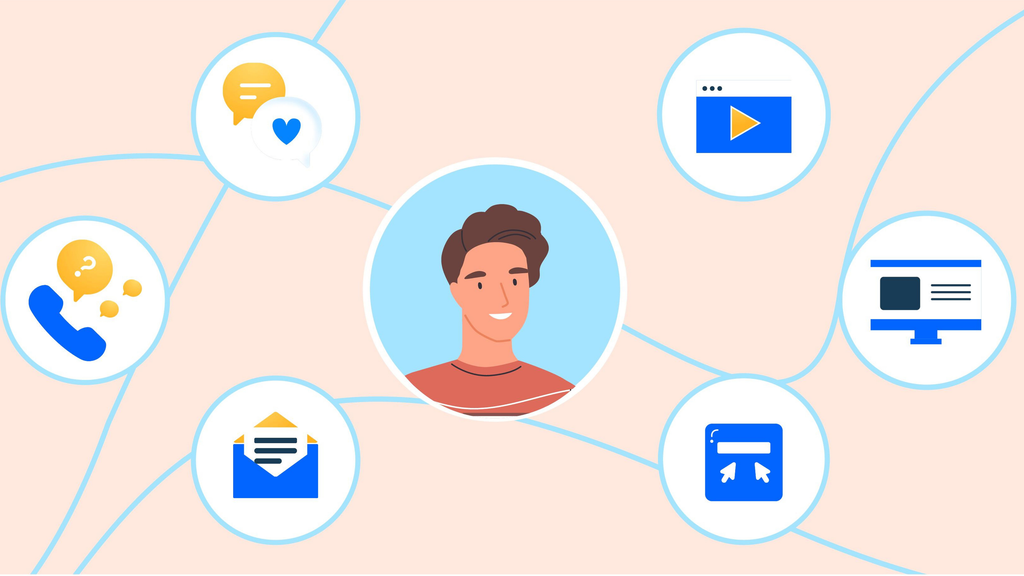
Multichannel communication means a business uses different channels, like SMS, WhatsApp, email, voice, RCS, social media, and website chat, to reach customers. The catch is that these channels often run through separate tools, teams, and databases, even when each one performs well on its own.
Omnichannel communication connects these same channels into one consistent journey. A customer might discover a product on WhatsApp, get an SMS confirmation, ask a follow-up question by voice, and have an agent see the full history already. Nothing about the interaction feels like separate departments.
The key difference is simple: multichannel communication means using many channels, while omnichannel means making those channels work together.
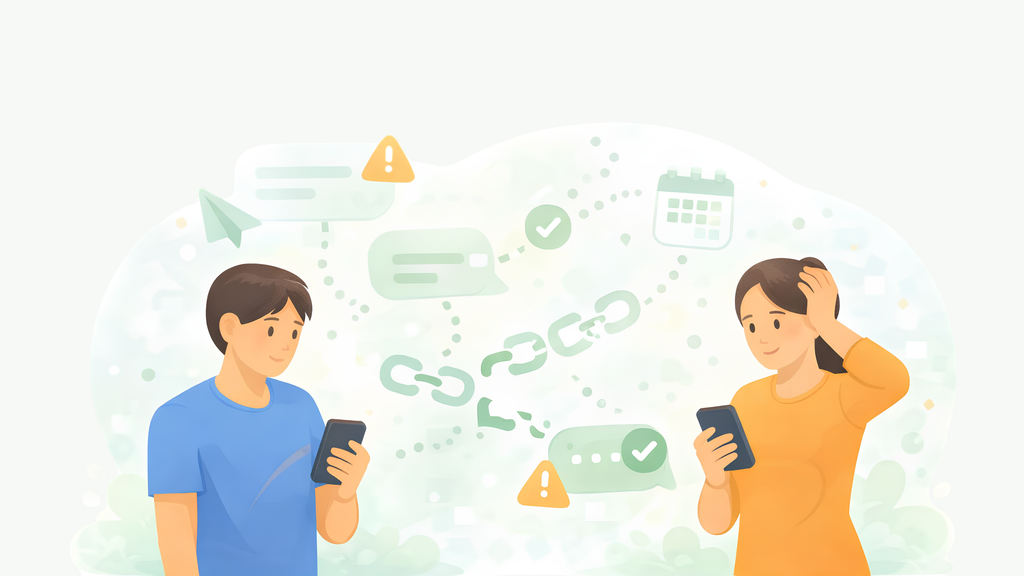
A customer shares their name, order number, or issue on WhatsApp. Later, a support agent asks for the same details again on a call. This happens often when customers move from a chatbot to a human, or from SMS to support, and it makes the business look unprepared.
What businesses can do: Connect communication channels with CRM systems and customer records, so relevant history moves with the conversation instead of resetting.
A WhatsApp chatbot might use one tone, SMS another, and voice support a completely different process. A customer may get an offer on WhatsApp, then hear different information from the call centre a day later.
What businesses can do: Create shared communication guidelines and centralise key information, so tone, pricing, and details stay consistent across every channel.
Marketing sees campaign responses, sales sees leads, and support sees complaints, but nobody has the full picture. A customer might complain to support while marketing keeps sending promotions to the same person.
What businesses can do: Build shared visibility so customer data, conversation history, and support updates connect across teams, rather than living in five separate systems.
A customer starts on WhatsApp but needs voice support for something complex. If a chatbot can’t offer human help, or voice support can’t see chat history, the journey stalls right when the customer needs it most.
What businesses can do: Design channel transitions in advance, so customers can move from messaging to voice, or from AI to a human agent, without losing context.
Some businesses track only campaign volume, messages sent, or calls completed. These numbers look good on a dashboard, but they miss how customers actually respond or where they drop off along the way.
What businesses can do: Connect inbound and outbound communication, then use response data to understand what happens after a message is delivered.
WhatsApp sends an order update, SMS repeats it, and email sends a reminder after the customer already acted. This creates duplicate messages that feel repetitive rather than helpful.
What businesses can do: Connect automation across channels using shared triggers and communication history, so each system checks recent activity before sending anything.
You might know SMS delivery rates or WhatsApp response rates, but not where a customer first engaged, why they switched channels, or how long resolution actually took.
What businesses can do: Track journeys across channels and connect that data to outcomes like conversions, support resolution, and retention.
Disconnected business communication often leads to repeated questions, delayed responses, confusing information, and duplicate messages. Customers may struggle to switch channels smoothly and lose trust in the process along the way.
The same gaps create higher support workloads, more manual processes, and limited customer visibility. Duplicate communication adds cost, and missed sales opportunities become harder to track and recover.
The problem usually isn’t the number of channels a business uses. It’s how well those channels work together. A business can have strong SMS delivery and a solid WhatsApp presence, and still deliver a disconnected omnichannel customer experience if information never moves between them.
A few focused changes can close most of these gaps.
Bring customer information, conversation history, and support records together in one place, instead of five.
Identify where customers discover, ask questions, purchase, and request support across every touchpoint.
Use SMS for alerts, WhatsApp for conversations, RCS for richer interactions, Voice AI for suitable support, and human agents for complex issues.
Make workflows respond to actual customer actions instead of operating separately from each other.
Let customers move between channels without repeating information they already gave once.
Measure resolution, conversion, and response across the complete journey, not just one channel in isolation.
Use consent, opt-outs, and preferred channels to guide how often and where you reach out.
The goal isn’t using every channel everywhere. It’s giving each channel a clear role within one connected experience.
Building a connected experience takes more than adding communication tools. Businesses need infrastructure that connects SMS and A2P messaging, the WhatsApp Business API, RCS, voice and cloud telephony, conversational AI, agentic AI, CRM systems, and analytics.
This is where CPaaS becomes useful. A Communication Platform as a Service connects communication channels through APIs and shared workflows, instead of managing each one separately. Deloitte research found that only 25% of contact centers currently use dedicated omnichannel routing tools, which shows how much room most businesses still have to close this gap.
CPaaS helps businesses scale communication while improving flexibility and visibility, turning separate platforms into one connected system rather than a patchwork of tools.
Modern businesses need more than multiple channels. They need a partner that brings those channels together and keeps up with changing customer expectations.
FirstConnectt helps enterprises build connected communication across A2P messaging, SMS, the WhatsApp Business API, RCS, voice and cloud telephony, conversational AI, and agentic AI. This covers authentication, alerts, customer engagement, support, and automation through one connected CPaaS infrastructure.
Customers can reach you directly on WhatsApp, receive an SMS update, speak with Voice AI, and reach a human agent when needed, without any part of that feeling separate. The focus stays on flexibility and visibility, not simply adding more channels.
Using SMS, WhatsApp, email, RCS, and voice doesn’t automatically make a business omnichannel. The real test is what happens when a customer moves between those channels. Do they repeat their information? Do different teams see the same history? Are automated messages connected? Can customers get consistent answers, and can the business measure the full journey? If the answer is no, communication may still be multichannel rather than truly connected.
Real omnichannel communication ties together channels, context, teams, and automation. It helps customers move through their journey with less friction and gives businesses better visibility into every interaction. FirstConnectt helps enterprises build that connected infrastructure, so every channel works together and every customer journey keeps moving forward.
It connects different communication channels into one consistent, connected customer experience.
Multichannel communication uses channels separately. Omnichannel communication connects them and shares relevant customer context.
Signs include repeated questions, disconnected dashboards, inconsistent information, duplicate messages, and limited journey-level analytics.
It reduces repetition, personalises interactions, and keeps support consistent across every channel a customer uses.
CPaaS connects messaging, voice, AI, and business systems into one connected communication journey.
Share this article
Article
 Article
 Article
Ready to put these ideas to work? Talk to our team about your communication stack.
Get Started →