
 Article
September 16, 2026
8 min read
 FirstConnectt
Enterprise communication insights
FirstConnectt
Enterprise communication insights
Article · FirstConnectt Insights
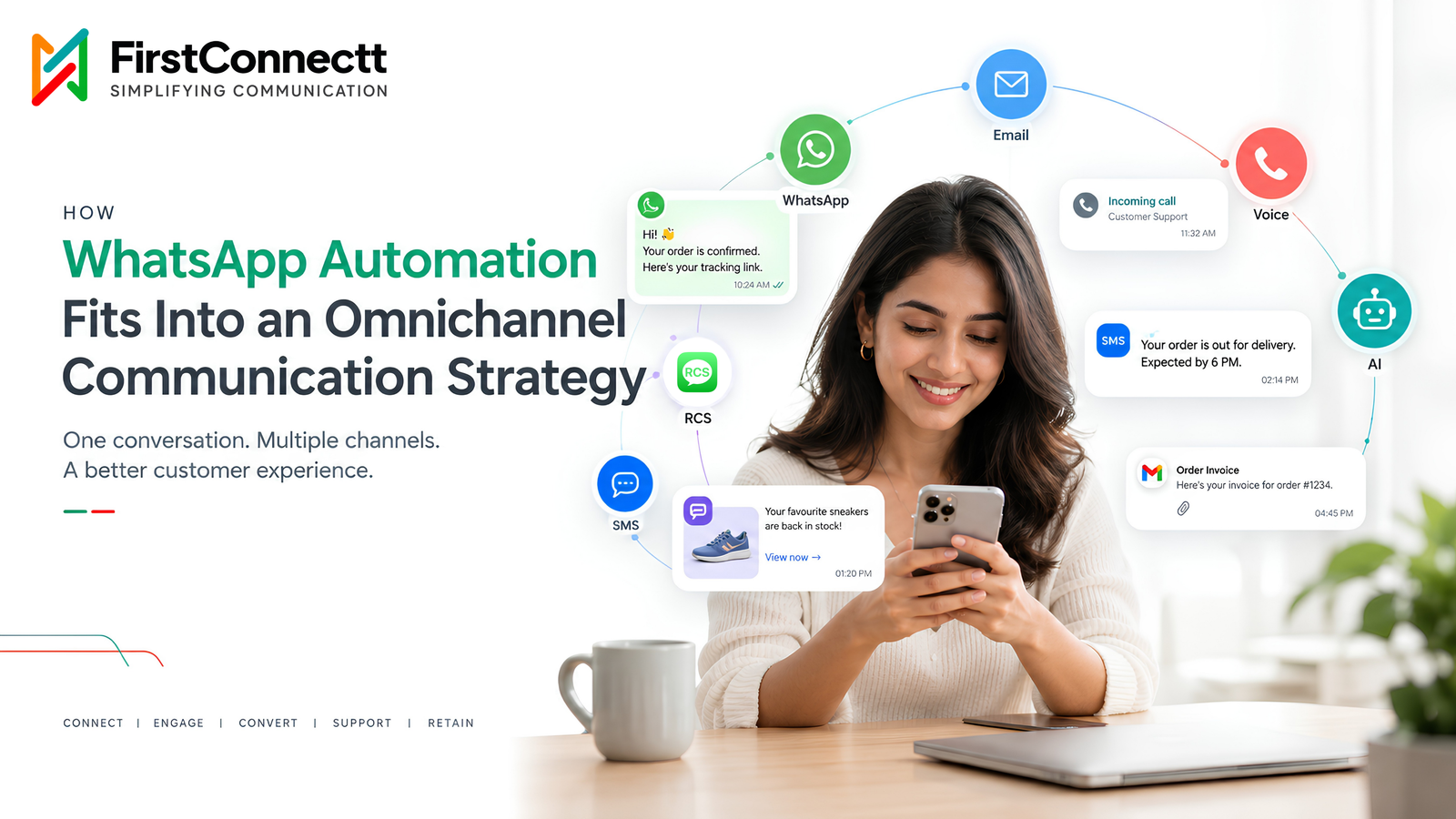
A customer finds a product online, asks a question on WhatsApp, then gets an SMS confirmation, followed by a call about delivery. To the customer, this feels like one conversation. Businesses often treat WhatsApp automation as its own project, separate from everything else. That approach limits what automation can actually achieve. The real value shows up only when WhatsApp works alongside other channels.
Here’s how that connection actually works.
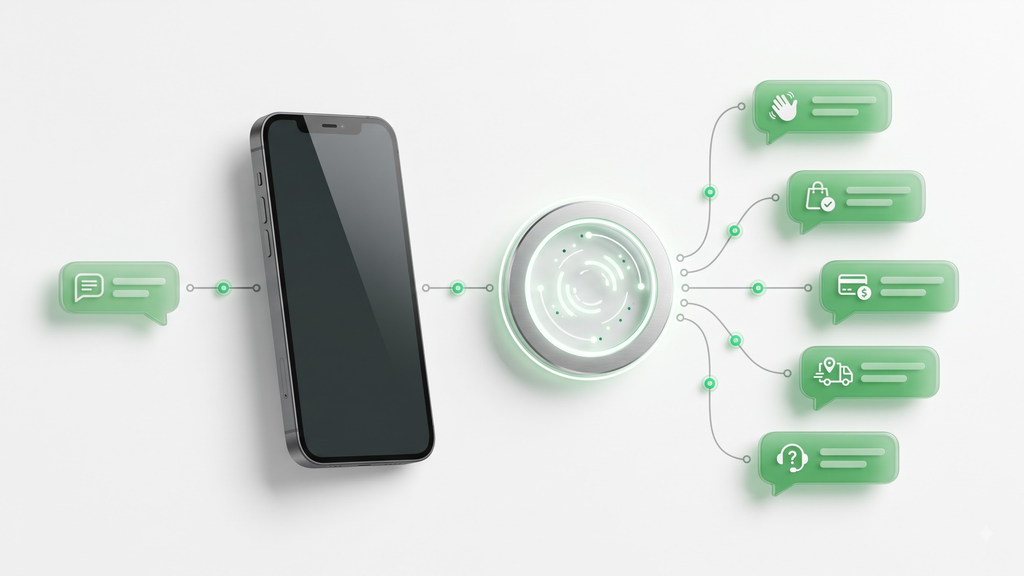
WhatsApp automation lets businesses use predefined workflows, the WhatsApp Business API, and chatbots to handle customer interactions automatically. Common examples include order confirmations, appointment reminders, OTPs, delivery updates, FAQs, and follow-up messages.
The basic flow stays simple: a customer sends a message, an automated system checks business data, then responds or takes action. Automation doesn’t mean every conversation goes to a bot, though. Simple, repetitive interactions can be automated, while complex requests still move to a human agent. Industry research has found that 65% of consumers prefer messaging a business on WhatsApp over sending an email for product questions or support, which explains why this channel carries so much automation potential.
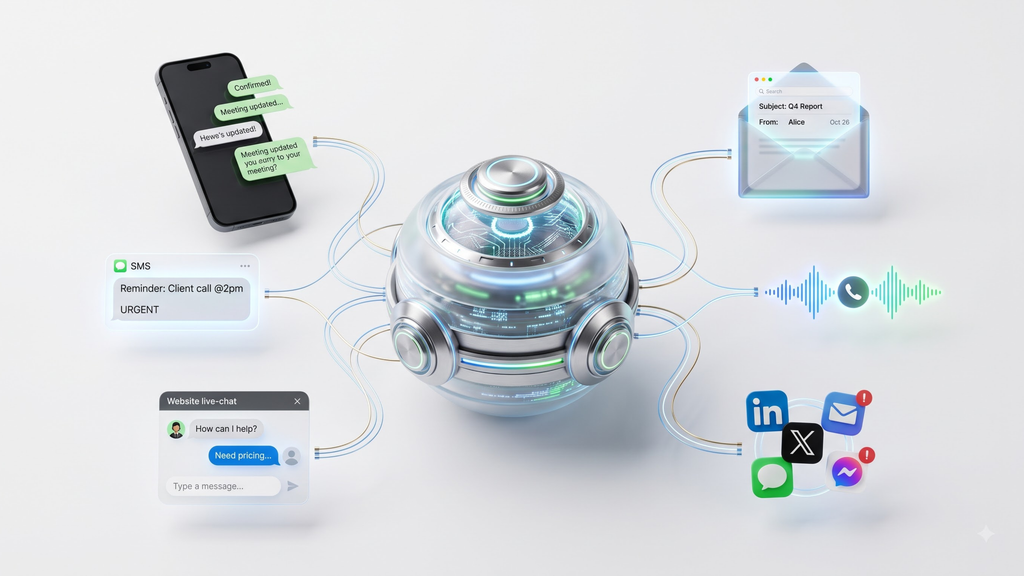
Omnichannel communication connects multiple customer communication channels so people get a consistent experience across all of them. These channels can include WhatsApp, SMS, RCS, voice, email, and AI.
Picture a customer who gets an order confirmation on WhatsApp, then an SMS delivery alert, then calls support about a delay. In a connected setup, the business retains context throughout each step.
Multichannel versus omnichannel. Multichannel means several channels working separately, each with its own data. Omnichannel means those same channels working together, sharing one view of the customer.
Businesses can automate WhatsApp perfectly and still leave other channels disconnected. A customer asks about an order on WhatsApp, gets an SMS delivery update, then calls about a delay. If these systems don’t share information, the customer explains the same issue three times.
This creates repetition, delays, frustration, lost context, poor visibility, and a heavier support workload. Automation makes one channel faster. Omnichannel communication makes the entire journey more connected.
WhatsApp can play a role at nearly every stage of the customer journey, from the first message to long-term retention.
Customers discover products, offers, and businesses through everyday WhatsApp conversations, often started by a shared link or an ad.
Automated responses answer common questions quickly, keeping customers engaged instead of waiting for a reply.
Businesses guide customers toward product selection, bookings, purchases, payments, or enquiries, all inside the same thread. This turns everyday chats into conversational commerce, where discovery and purchase happen together.
WhatsApp handles order confirmations, payment updates, booking confirmations, and delivery notifications as the transaction completes.
Customers can start support conversations on WhatsApp and, when the issue needs more attention, move to another channel or a human agent.
Relevant, well-timed automated follow-ups help businesses maintain the relationship after the purchase is done.
The full path looks like this: discover, engage, convert, transact, support, retain. WhatsApp can participate across several of these stages, while other channels support the rest.
WhatsApp doesn’t need to replace every channel it touches. It works best as part of a coordinated set of tools.
WhatsApp handles richer conversations, while SMS covers critical alerts and reaches customers when WhatsApp isn’t available.
Both support richer business messaging. Businesses choose between them based on customer availability, use case, and journey stage.
When a conversation gets complicated, voice offers a more direct, human support experience.
Conversational AI can automate responses, understand customer intent, and guide people through common journeys across channels.
Email still matters for documents, detailed information, receipts, and formal communication that customers want to keep.
The goal isn’t to replace every channel with WhatsApp. It’s to make WhatsApp work as part of a connected communication ecosystem.
Order placed, WhatsApp confirmation, delivery update, support, all inside one connected thread.
Customer request, automated response, relevant information, then human support whenever it’s required.
Appointment booking, WhatsApp reminder, confirmation, and a follow-up after the visit.
Booking, confirmation, travel update, and customer assistance if plans change.
Enquiry, automated information, application support, and a follow-up to keep prospects engaged.
Lead enquiry, qualification, property information, and site visit scheduling handled in sequence.
The focus across every industry stays on automating the journey, not simply listing features.
Automation handles routine interactions without customers waiting for an available agent.
Customers receive consistent information no matter which touchpoint they use.
Teams spend less time answering the same basic questions again and again.
Connected systems help businesses maintain relevant interaction history across channels.
Automation supports increasing interaction volumes without needing every message handled manually.
Customers move between channels without feeling like they’re starting from zero each time.
Not every customer problem should be handled by a bot, especially sensitive ones.
WhatsApp performs better connected to the broader communication ecosystem, not isolated from it.
Automation without relevance quickly turns into noise that customers start to ignore.
Customers need a clear, quick path to a person when automation can’t help.
Businesses should monitor response rates, resolution, delivery, engagement, and customer feedback regularly.
Automation must follow applicable messaging, privacy, and customer-consent requirements at every step.
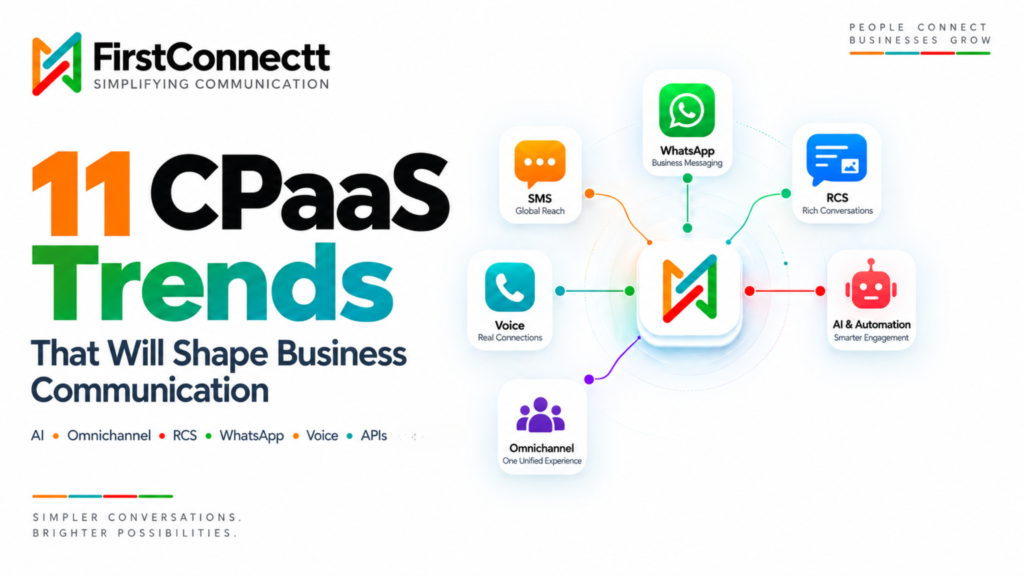
Managing WhatsApp alongside SMS, RCS, voice, and AI gets complicated fast when each channel runs on separate infrastructure. CPaaS acts as a communication infrastructure layer that connects these channels through shared APIs and integrations.
This helps businesses connect multiple channels, build automated workflows, manage communication at scale, and create consistent customer journeys. Widely cited industry benchmarks show WhatsApp messages achieve open rates near 98%, compared with roughly 20 to 25% for email. That gap explains why many businesses build their WhatsApp automation strategy around connected infrastructure rather than a standalone tool.
FirstConnectt helps businesses connect WhatsApp, SMS, RCS, voice, and AI through a unified CPaaS infrastructure, supporting more connected customer communication experiences.
Identify where customers communicate and what they need at each stage.
Find conversations that can be automated safely without losing quality.
Don’t force every interaction onto WhatsApp just because it’s convenient.
Make sure customer context can move between every communication touchpoint.
Create a clear, fast path from automation to human support.
Track communication performance and customer feedback, then adjust regularly.
WhatsApp Is a Channel. The Journey Is Bigger.
WhatsApp has become central to business communication, but customers think in outcomes, not channels. WhatsApp automation delivers more value connected to SMS, RCS, voice, and AI. FirstConnectt helps businesses build that connected experience through CPaaS infrastructure.
It uses APIs, workflows, and automated systems to handle repetitive interactions like notifications, FAQs, reminders, and support.
It connects multiple communication channels so customers get a consistent, connected journey across all of them.
Yes. It works alongside SMS, RCS, voice, email, and AI as part of a broader strategy.
It speeds up responses, keeps communication consistent, and helps customers move between channels smoothly.
CPaaS connects WhatsApp with other channels and business systems, enabling scalable, connected communication.
Share this article
Article
 Article
 Article
Ready to put these ideas to work? Talk to our team about your communication stack.
Get Started →