
 Article
October 14, 2026
6 min read
 FirstConnectt
Enterprise communication insights
FirstConnectt
Enterprise communication insights
Article · FirstConnectt Insights
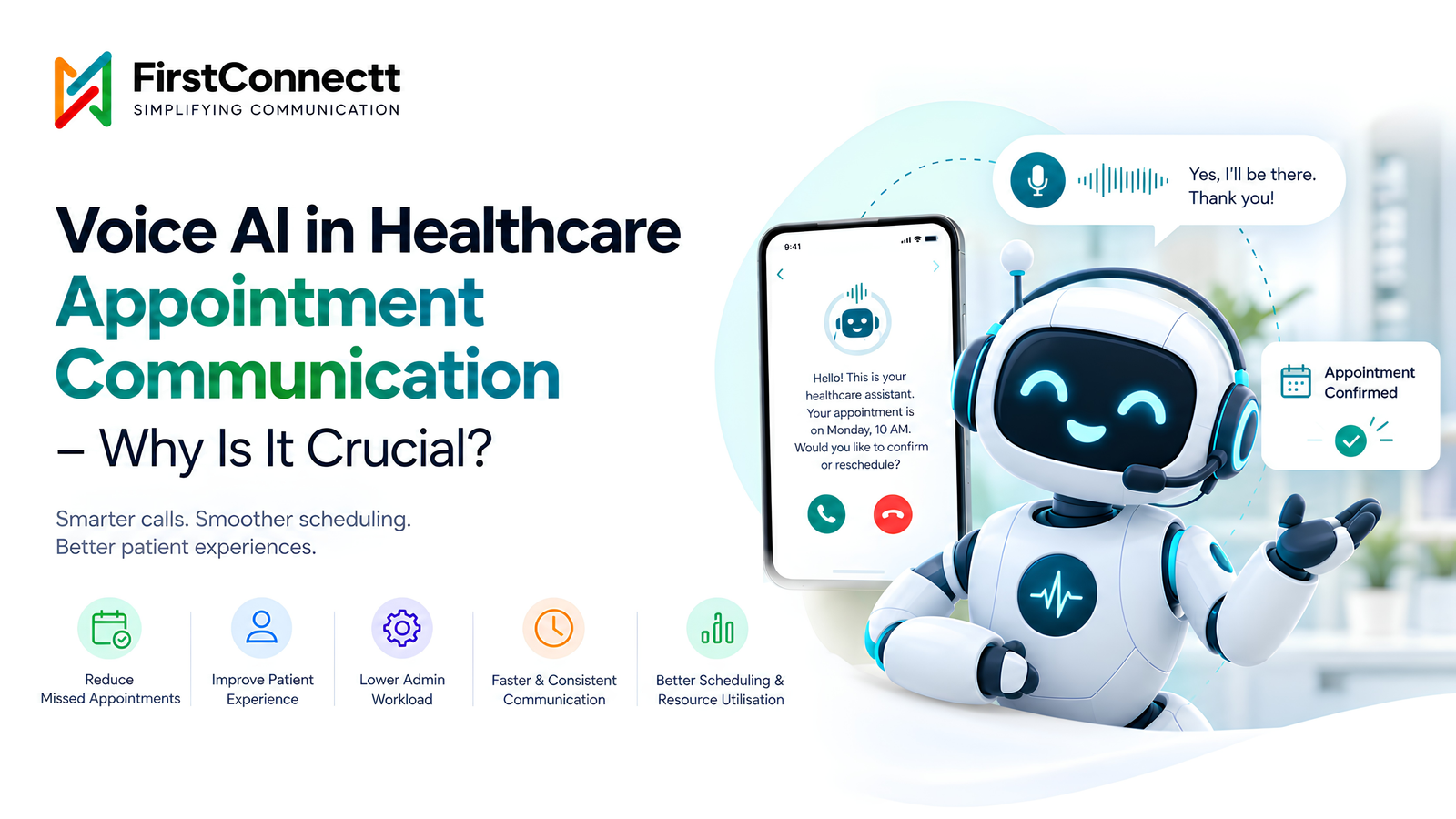
Every day, healthcare providers manage multiple responsibilities: treating patients, coordinating medical staff, maintaining records, and scheduling consultations. Handling each stage effectively can become a complex challenge. Amid these responsibilities, appointment communication often becomes difficult. Missed calls, delayed confirmations, last-minute cancellations, and forgotten appointments can disrupt hospital operations and affect patient care.
However, healthcare services are becoming increasingly digital. Patients expect convenient, timely, and reliable communication. Standard management methods may struggle to meet these expectations, especially when clinics and hospitals handle hundreds of appointments daily.
This is where intelligent technology like voice AI in healthcare appointment communication can make a meaningful difference. It helps in simplifying appointment management while delivering a smoother patient experience.
Now let’s look at how automation can actually help in healthcare appointment communication
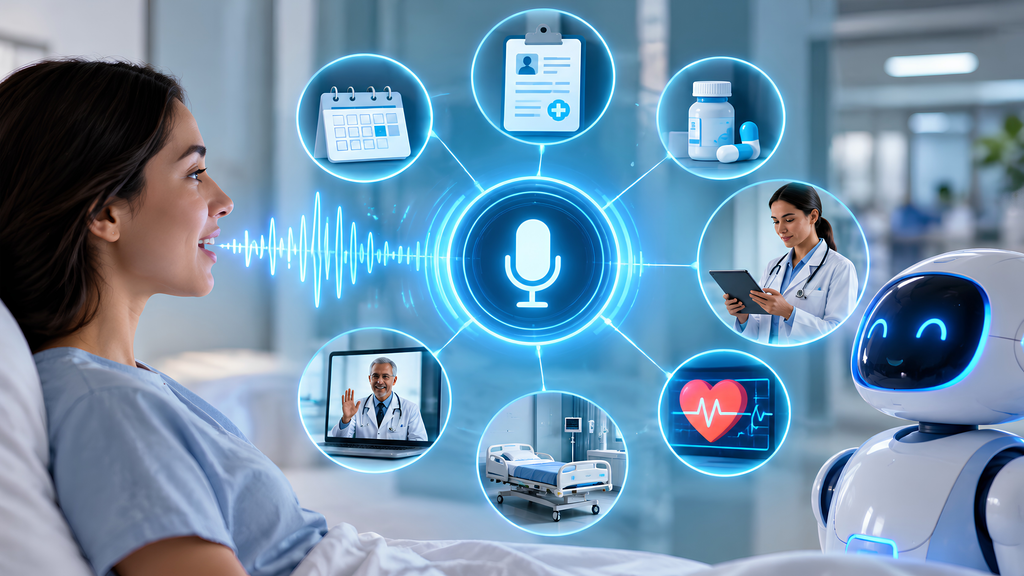
VoiceAI in healthcare appointment communication refers to the use of artificial intelligence-powered voice systems to manage interactions related to medical appointments. These systems can communicate with patients through automated phone calls, understand spoken responses, provide appointment information, and assist with routine scheduling tasks. Unlike traditional automated calling systems that depend on fixed keypad inputs, conversational VoiceAI has an inbuilt speech recognition system that helps it recognise our language to understand what patients say. Depending on its configuration, it can confirm appointments, send reminders, help patients reschedule consultations, and route complicated requests to human staff.
For example, a patient might receive a call reminding them about an upcoming consultation. They can confirm their attendance or request a different time through a natural conversation rather than waiting to speak with reception.
Missed appointments are a persistent challenge for healthcare providers. Patients may forget their consultation dates, misunderstand appointment timing, or become occupied with other responsibilities. These missed visits can leave valuable appointment slots unused and delay access for other patients.
VoiceAI help address this problem through timely, automated reminders. Patients can receive calls before scheduled consultations, giving them an opportunity to confirm attendance or communicate a scheduling conflict.
For instance, a clinic can configure its system to contact patients a day before their appointments. If someone cannot attend, the system may help initiate rescheduling according to the clinic’s availability rules.
VoiceAI in healthcare appointment communication can therefore support more consistent follow-ups and help clinics manage appointment schedules proactively.
Patients want healthcare services to be accessible without unnecessary administrative difficulties. Spending several minutes waiting for a receptionist to answer a call can be frustrating, particularly when someone needs to confirm a consultation or make a simple scheduling change.
AI-Powered voice assistants can handle routine inquiries without requiring patients to wait for staff availability. Depending on the system’s capabilities, patients may be able to receive appointment details, confirm visits, or request rescheduling outside normal reception hours.
A well-designed system should use clear language, offer appropriate language options, and provide an easy way to reach a human representative when needed.
These capabilities make communication more convenient while allowing patients to spend less time navigating administrative procedures.
Receptionist and administrative teams often manage incoming calls, appointment bookings, reminders, cancellations and patient inquiries simultaneously. During busy periods, these repetitive responsibilities can create long queues and increase the likelihood of communication errors.
VoiceAI can automate suitable routine tasks, allowing staff to focus on responsibilities that require human attention.
VoiceAI in healthcare appointment communication can help healthcare organisations distribute administrative work more efficiently rather than relying entirely on manual calling.
Delayed communication can create uncertainty for patients. Someone who has requested an appointment change may not know whether the request has been processed, while another patient might remain unaware of a revised consultation time.
AI-powered voice systems can help healthcare providers respond to routine appointment-related requests more consistently. They can initiate scheduled reminders, deliver approved information, and process straightforward responses according to predefined workflows.
Instead of depending entirely on staff members to remember every follow-up, providers can establish automated communication workflows with clear escalation rules.
Nevertheless, automated messages must reflect accurate scheduling information. Healthcare organisations should ensure that their systems receive updated records and avoid communicating unverified appointment changes.
Efficient appointment management involves more than booking consultations. Healthcare providers must also coordinate doctor availability, consultation duration, room allocation, and patient requirements.
When patients cancel without sufficient notice, appointment slots may remain unused. If cancellations are communicated promptly, clinics may have an opportunity to offer those slots to other patients.
AI-powered voice systems can help identify cancellations, record rescheduling requests, and trigger follow-up workflows. When integrated with an approved scheduling platform, they may also assist with offering available appointment options.
VoiceAI in healthcare appointment communication can contribute to better coordination between patients and administrative teams by making appointment-related information easier to exchange.
For example, a diagnostic centre could use automated calls to remind patients about scheduled tests and communicate approved preparation instructions. More complex questions would be directed to qualified staff.
This results in a more organised scheduling process, provided that the technology works reliably with existing systems.
As healthcare organisations expand, their communication requirements grow as well. A small clinic may initially manage appointments through a few receptionists, but a hospital network may need to coordinate thousands of patient interactions across multiple departments.
Hiring additional staff for every increase in call volume may not always be practical. Automated voice systems offer another way to manage routine communication at scale.
Healthcare providers can configure workflows for different departments, appointment categories, and reminder schedules. The system can then handle eligible interactions according to those rules.
However, scalability depends on system capacity, integration quality, language support, and appropriate escalation procedures. Healthcare providers should evaluate these factors before implementation.
Not every patient is comfortable using mobile applications, online booking portals, or text-based reminders. Some may prefer speaking over the phone, while others may face difficulties navigating digital interfaces.
Depending on its capabilities, a system may support multiple languages, recognise spoken appointment preferences, and repeat information when necessary. These features can be especially helpful for patients who prefer verbal communication.
VoiceAI in healthcare appointment communication should nevertheless be designed around different patient needs. Speech recognition can be affected by background noise, accents, hearing or speech differences, and connectivity problems.
Healthcare organisations should offer alternatives, such as human assistance and other accessible communication channels, rather than making automated voice interactions the only option.
Healthcare communication involves sensitive personal information. Appointment reminders and automated calls must therefore be designed with privacy, confidentiality, and data security in mind.
Healthcare providers should select systems with appropriate security controls, access permissions, secure data handling and clear policies governing call recordings and retention.
They should also verify patient contact information, disclose automated interactions where appropriate, and ensure that messages reveal only the information necessary for their intended purpose.
Organisations must assess applicable privacy and healthcare requirements, including relevant Indian data protection obligations where applicable. They should also establish procedures for handling incorrect records, patient complaints, and requests to stop automated calls.
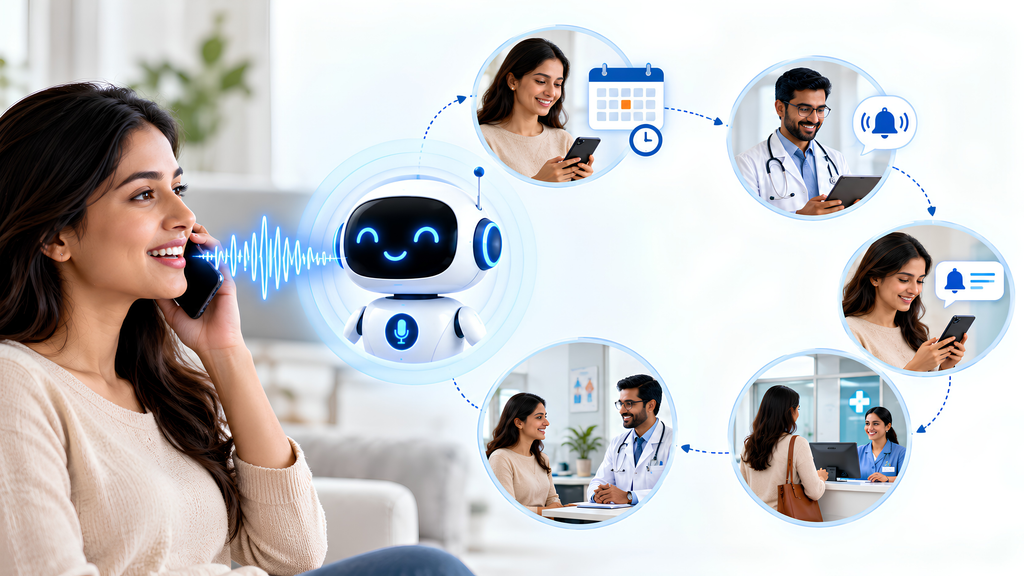
Implementing Voice AI in healthcare requires a clear strategy, not just activating an automated calling system. The goal is to make appointment communication more efficient while ensuring patients receive timely, clear, and helpful information.
Healthcare providers can follow these steps for successful implementation:
Review common issues such as missed appointment reminders, high call volumes, and frequent rescheduling requests. Identify repetitive tasks that Voice AI can manage efficiently.
Set up automated calls for appointment reminders, confirmations, cancellations, and rescheduling. Ensure patients receive clear instructions and relevant appointment details.
Transfer complex queries, sensitive concerns, or requests beyond the AI’s capabilities to human staff. Make it easy for patients to reach a healthcare representative when needed.
Follow applicable privacy and data protection requirements when handling patient information. Ensure automated calls share only appropriate information and use secure systems.
Overall, by implementing Voice AI in healthcare appointment communication with this approach, you can reduce repetitive calling tasks, improve appointment coordination, and create a smoother communication experience for patients. However, the process can be quite complicated for a do-it-yourself method. At this point, an experienced voice AI provider like FirstConnectt can support and ensure a smooth process.
Healthcare organisations need communication solutions that help them manage patient interactions efficiently while maintaining reliability and trust.
FirstConnectt focuses on business communication automation and customer interaction solutions that can help organisations streamline routine communication processes. For healthcare providers evaluating AI-powered voice workflows, the priority should be finding an approach that fits their appointment systems.
Healthcare appointment management is an essential part of delivering an organised and patient-friendly experience. Missed reminders, unanswered calls, and inefficient scheduling can create problems for both patients and healthcare professionals.
VoiceAI in healthcare appointment communication offers a practical way to automate routine reminders, support appointment confirmations, reduce administrative pressure, and improve communication accessibility. When implemented thoughtfully, it can help healthcare organisations coordinate appointments more consistently while allowing staff to concentrate on tasks that require personal attention.
Ready to improve your healthcare communication workflows? Explore how FirstConnectt can help your organisation streamline routine business communications and build a more responsive experience for the people it serves. Visit FirstConnectt.com to learn more about its communication automation solutions.
➢ It uses artificial intelligence to automate appointment reminders, confirmations, and rescheduling requests through phone conversations.
➢ It sends timely appointment reminders and allows patients to confirm, cancel or request rescheduling, helping reduce missed visits.
➢ Yes, when implemented with appropriate data protection, access controls, secure information handling and human oversight.
Share this article
Article
 Article
 Article
Ready to put these ideas to work? Talk to our team about your communication stack.
Get Started →