
 Article
October 6, 2026
7 min read
 FirstConnectt
Enterprise communication insights
FirstConnectt
Enterprise communication insights
Article · FirstConnectt Insights
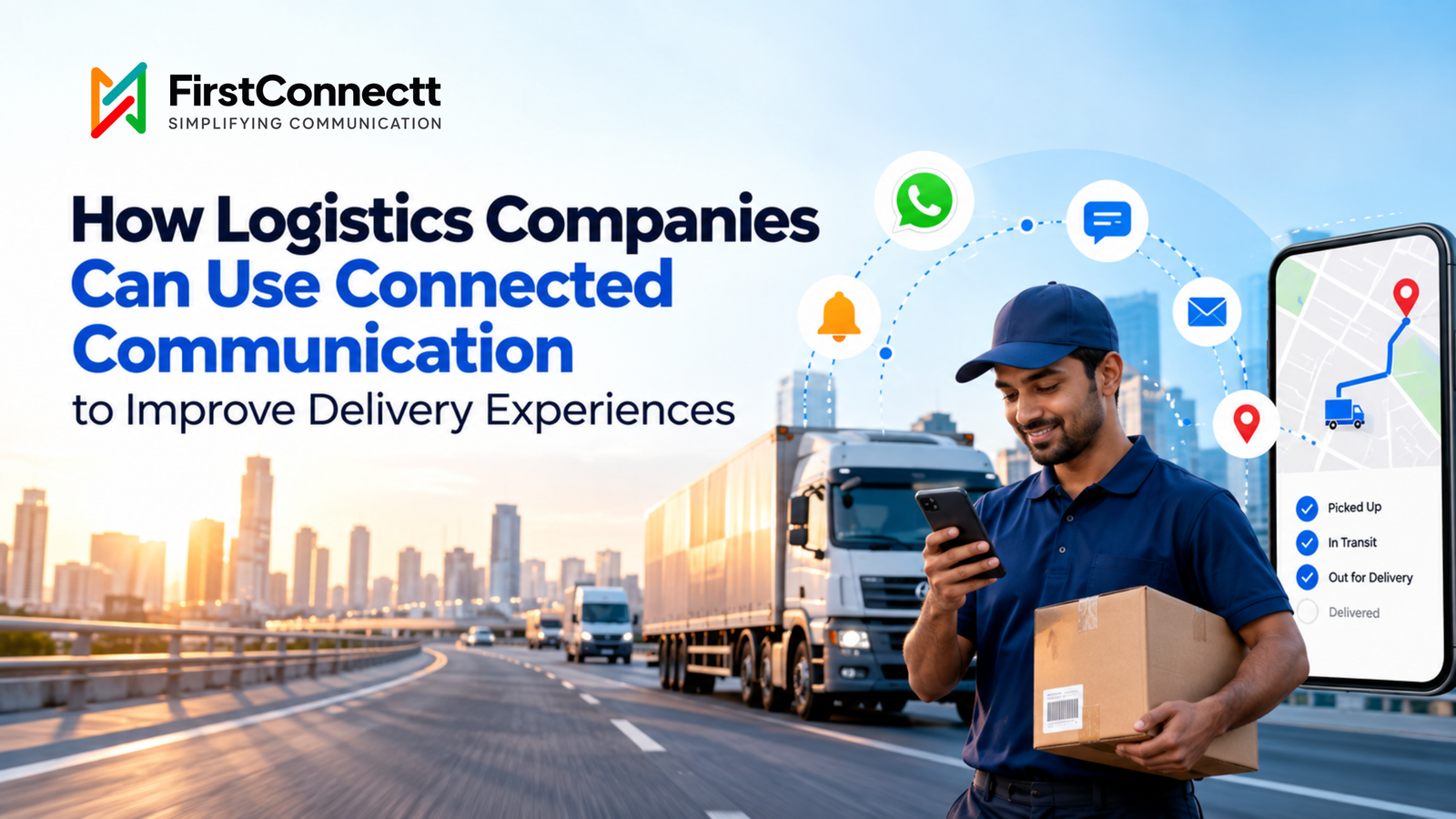
Logistics Companies Delivery Is More Than Moving a Package — It’s Also About Communication
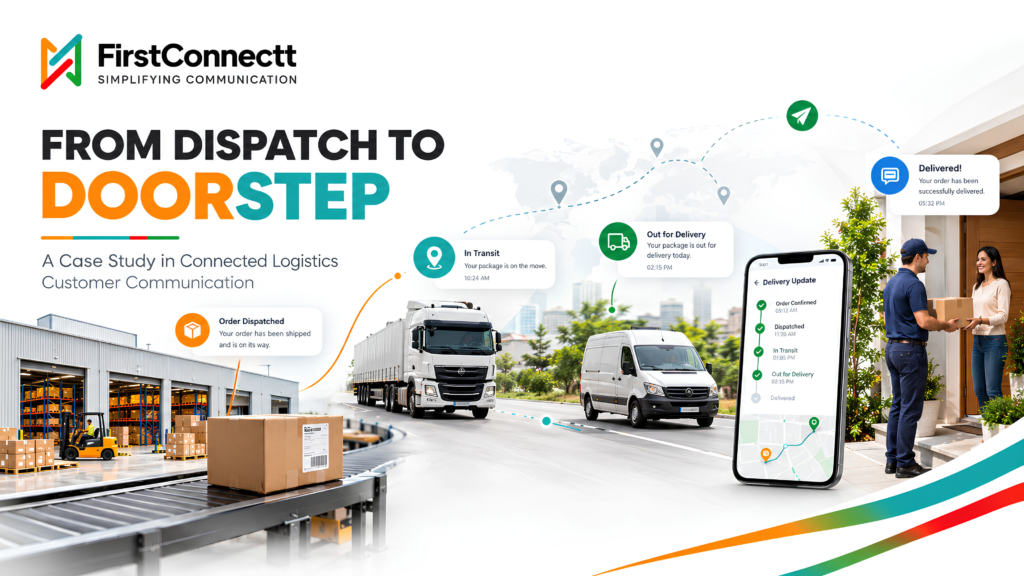
A package can reach the correct address and still leave a customer frustrated, simply because nobody kept them informed along the way. People want to know where their order is, when it’s arriving, and what happens if something changes. Logistics customer communication shapes that experience just as much as the delivery itself. From the first dispatch alert to the final confirmation, every update shapes how customers feel about the journey.
The blog guides logistics leaders on how to use connected communication to improve their delivery experiences.
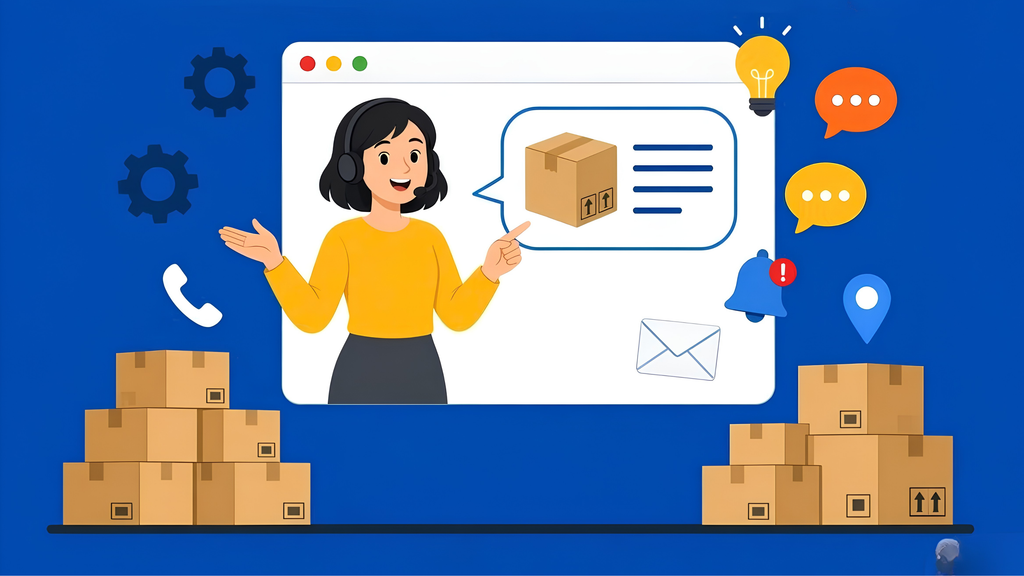
Logistics customer communication covers every message a customer receives about their shipment: order confirmation, shipment confirmation, dispatch updates, estimated delivery times, out-for-delivery alerts, delivery attempts, rescheduling, delays, delivery confirmation, returns, and support.
Communication shouldn’t be treated as an afterthought bolted onto operations. A package physically moves through a logistics network, but customers experience most of that journey through notifications and support interactions instead of the truck itself.
Visibility in logistics isn’t only about tracking the package. It’s just as much about keeping the customer informed the entire time.
The first communication stage happens right after a customer places an order. They should know the order was confirmed, the shipment has been processed, tracking is available, and further updates are coming.
A typical flow looks like: order confirmed, shipment processed, dispatched, tracking available. SMS and WhatsApp both work well here, depending on customer preference and what kind of information is being shared.
Transactional notifications should stay free of unnecessary promotional content. The purpose at this stage is simple: reduce uncertainty and give customers real visibility from the very start.
Customers pay closer attention as delivery gets closer. Useful notifications at this stage include shipment in transit, arrival at a local facility, out for delivery, an estimated delivery window, delays, and completion.
A typical sequence might run: “Your order is out for delivery” in the morning, “Your delivery is expected between 2 PM and 5 PM” later, then “Your package has been delivered” once it arrives. Timely updates like these cut down on customers repeatedly checking tracking pages or calling support.
Communication automation can trigger these messages based on actual shipment events, so the update reflects the latest real status rather than a rough guess.
A delivery attempt can fail simply because nobody was home. Connected communication helps coordinate this better: a message like “Your delivery is scheduled for today; will someone be available to receive it?” lets customers confirm through messaging or voice.
Businesses can also share preferred delivery windows, delivery instructions, address details, availability confirmations, and requests for another delivery attempt. This turns a delivery attempt into a coordinated interaction rather than a one-sided notification, making the process more convenient for customers and delivery teams alike.
A missed delivery traditionally means the customer calls support, explains the situation, and waits for another attempt. Connected communication removes most of that friction.
A typical journey: delivery attempt missed, customer gets a WhatsApp or SMS update, selects a new delivery time, the logistics system updates the request, and confirmation goes out. Voice works well when a customer needs to discuss the details directly.
The important part is keeping this connected. If a customer reschedules through one channel, that update needs to reach every relevant team immediately, so the delivery team isn’t still working off the old information.
Tracking is one of the most common logistics communication needs. Customers usually want quick answers: where’s my package, has it left the warehouse, when will it arrive, is it delayed?
Instead of making customers repeatedly open a website or app, businesses can proactively share the updates that matter. WhatsApp works well for tracking links, shipment status, delivery information, and support options, while SMS handles concise alerts for important status changes.
The goal isn’t sending every possible event. It’s communicating the information customers are actually most likely to need.
Delays are sometimes unavoidable: weather, traffic, operational issues, or an incorrect address can all affect timelines. Businesses can’t always control the delay, but they can control how they communicate it.
Compare the two paths. Poor communication looks like: no update, customer waits, customer contacts support, frustration builds. Connected communication looks like: delay detected, customer notified, revised timeline shared, support available if needed.
Industry research on delivery communication has found that proactive updates can reduce complaints by around 40% and raise customer satisfaction by roughly 85%. Honest, timely updates should clearly state what changed, what to expect, whether action is needed, and where to get more help.
Not every logistics problem gets solved by an automated notification. Customers sometimes need real help with missing packages, damaged shipments, incorrect deliveries, address issues, returns, or delivery disputes.
Different channels can work together here: a customer raises an issue on WhatsApp, automation collects basic shipment details, voice handles a more detailed conversation, and human support takes over for genuinely complex cases.
The goal of connected communication isn’t eliminating human support. It’s making every channel work together, so customers reach the right kind of help without forcing every interaction into automation that isn’t built for it.
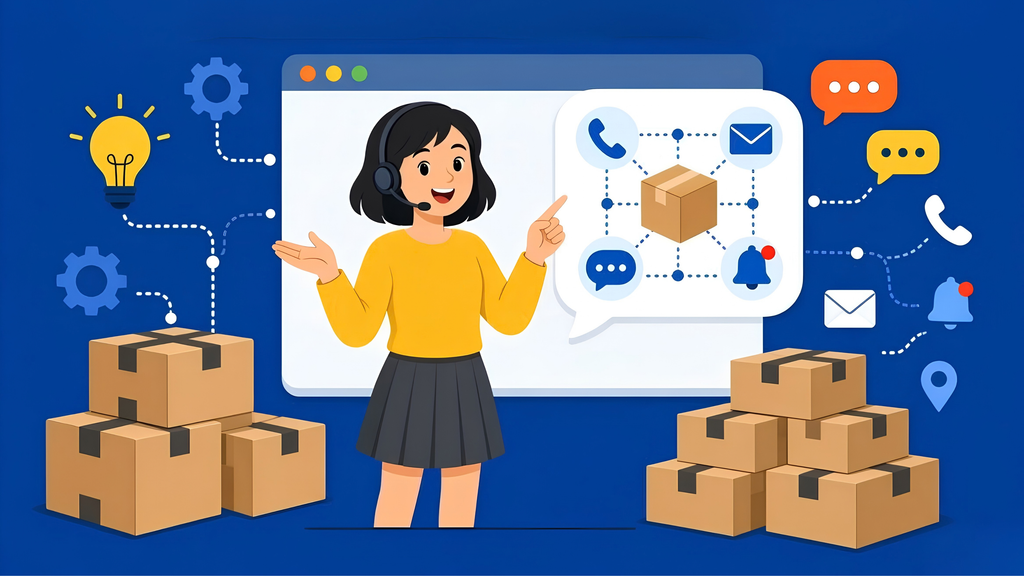
A logistics company might already run SMS, WhatsApp, voice, email, and customer support side by side. If these channels operate independently, though, communication gets fragmented fast.
Common problems show up quickly: repeated customer questions, inconsistent shipment information, delayed responses, separate communication histories, manual coordination between teams, and poor visibility for support staff.
A simple flow illustrates the alternative: shipment event, communication system, right channel, customer, response or action, logistics workflow. Connected communication brings every touchpoint together around the same customer journey, instead of leaving each channel to manage its own slice of the story.
Automation becomes essential as shipment volumes grow. A logistics company might send thousands, or millions, of updates across different delivery journeys, and manual communication simply can’t keep pace.
Automation can trigger messages for events like shipment dispatched, out for delivery, delayed, failed delivery attempt, delivered, or a rescheduling request. But automation still needs solid rules and reliable data behind it.
The focus should stay on relevant automation, not just more messages. Businesses should also monitor delivery rates, failed notifications, customer responses, and support escalations to catch communication gaps early.
CPaaS, or Communications Platform as a Service, lets businesses integrate messaging and voice capabilities into their applications and workflows through APIs. For logistics companies, this connects communication directly with shipment and customer systems.
A typical flow: logistics platform, API, communication platform, SMS/WhatsApp/voice, customer. This setup supports automated delivery notifications, WhatsApp communication, SMS alerts, voice interactions, customer support workflows, and communication across large volumes without needing separate infrastructure for each.
FirstConnectt helps businesses build connected communication journeys through its CPaaS ecosystem, bringing messaging, voice, automation, and AI capabilities together, so logistics teams can manage growing communication needs without managing five separate systems.
A practical framework can guide this work.
Step 1: Map the delivery journey — Identify every point where the customer needs information.
Step 2: Match the channel to the situation — Use SMS, WhatsApp, voice, or other channels based on the need.
Step 3: Automate predictable interactions — Automate routine updates like dispatch and delivery notifications.
Step 4: Keep customer context connected — Customers shouldn’t repeat information when switching channels.
Step 5: Keep human support available — Escalate complex or sensitive issues to actual employees.
Step 6: Monitor communication performance — Track delivery, responses, failures, and support escalations.
Logistics isn’t only about moving packages from one place to another. It’s also about keeping customers informed throughout that journey. Shipment confirmation, tracking, delivery availability, rescheduling, delays, and support all shape how customers experience the process. SMS, WhatsApp, voice, automation, and AI each serve a different purpose, and the real opportunity comes from connecting them into one customer journey rather than running them separately. FirstConnectt helps businesses connect messaging, voice, automation, and AI through a scalable CPaaS ecosystem, supporting stronger logistics customer communication as interactions grow. The package is what gets delivered, but communication is what keeps the customer connected to the journey.
It includes shipment updates, delivery notifications, tracking, rescheduling messages, and support shared throughout the delivery journey.
They keep customers informed about status, expected delivery times, and delays, reducing uncertainty and support requests.
By connecting shipment events with communication systems to trigger relevant SMS, WhatsApp, or voice updates automatically.
Different situations need different channels: SMS for alerts, WhatsApp for richer interactions, voice for complex issues.
CPaaS connects communication channels with business systems through APIs, supporting scalable, automated workflows.
Share this article
Article
 Article
 Article
Ready to put these ideas to work? Talk to our team about your communication stack.
Get Started →